Before AI Can Transform Event Planning, We Need to Talk About Data
Ask AI about this article

Artificial intelligence could help event teams identify planning conflicts, summarise operational updates and anticipate resource needs. But its usefulness depends on something less headline-worthy: the quality of the data behind it.
If venue plans are outdated, spreadsheets contradict each other and nobody is clearly responsible for updating operational records, AI inherits those problems. It may even make them harder to spot by turning incomplete information into a convincing answer.
For organisations exploring AI in event planning, preparing the data is part of preparing the operation.
Deloitte’s 2026 Global Sports Industry Outlook, published on February 2026, identifies AI as an increasingly important part of how sports organisations operate. The report suggests that the next wave of adoption is likely to begin in back-office functions, while highlighting the need to consolidate data, redesign workflows and establish clear governance.
For event organisers, federations and organising committees, this raises a practical question: is the information used to plan and deliver events ready to support AI?
Answering that question means looking closely at how teams manage venue layouts, infrastructure, inspections, assets and operational responsibilities.
Consider a hypothetical situation during event preparation.
The infrastructure team relocates a temporary compound. Logistics updates its delivery spreadsheet, but the revised venue plan remains in an email attachment. Security continues reviewing the previous layout, while an outstanding action still refers to the compound’s original location.
Each team holds part of the picture. None has a complete, current view.
An AI assistant asked to summarise readiness could miss the unresolved dependency. A planning tool could assess a configuration that no longer reflects the intended setup.
The difficulty begins before the AI processes anything: the organisation has not established which information is authoritative.
Four recurring problems deserve particular attention:
These conditions already create extra work for event planning teams. They also limit what AI can usefully do.
A record marked “complete” means little without knowing what was completed, where, when and by whom.
Was equipment delivered, installed or inspected? Does the status apply to the permanent venue configuration or a temporary event overlay? Has another team approved the change?
For AI to support a meaningful planning task, the relevant information needs enough context to distinguish these situations.
That means connecting records to identifiable venues, zones and assets. It also means keeping dates, sources, approval states and dependencies visible.
Historical information needs similar care. An issue from a previous event may offer a useful lesson, but only if teams can understand the configuration and circumstances in which it occurred.

Information governance becomes practical when teams can answer straightforward questions:
Who owns this record? Who can change it? Who approves the change? How will affected teams know?
The OECD’s AI accountability principle reinforces the importance of traceability across datasets, processes and decisions throughout an AI system’s lifecycle. In event planning, keeping a clear record of changes and approvals is a practical step towards that accountability.
A workable approach should establish:
Putting files in one place can help, but consolidation alone does not make them accurate. Teams still need a routine for reviewing, validating and maintaining the information they rely on.
Event planning has a spatial dimension. An asset occupies a location. An inspection concerns a particular area. A layout change can affect neighbouring functions.
Connecting operational records to a shared venue map helps teams understand those relationships.
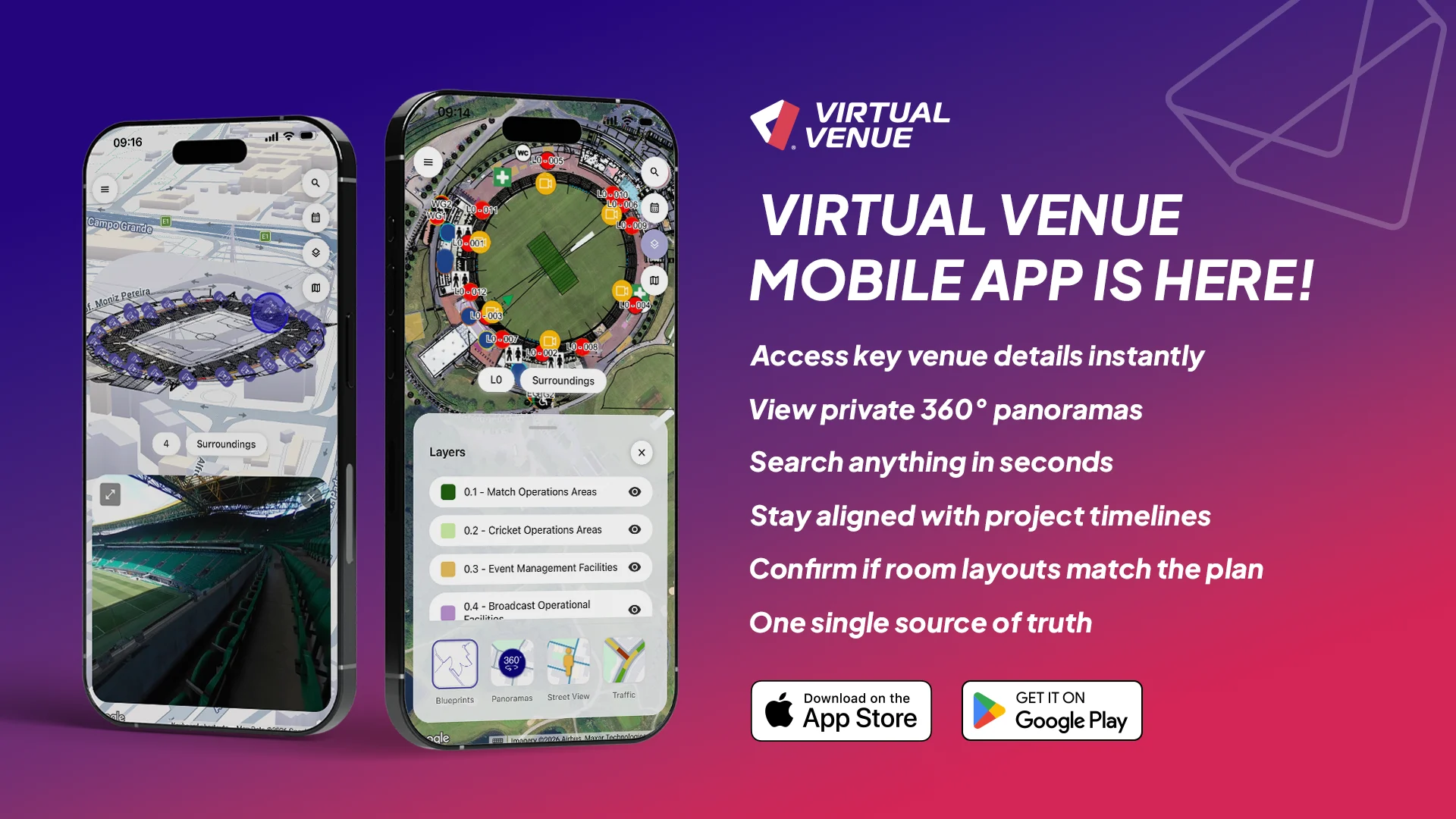
Virtual Venue supports this approach through a map-based environment that brings together venue overlays, inspections and location-linked issues. Its venue operations tools also support versioned plans, functional area allocation and assigned actions, helping teams coordinate around a common view of the venue.
Structured site visit reporting adds further context by connecting inspection findings, photographs and follow-up actions to specific venue locations.
This provides a practical foundation for improving planning information. Its value depends on teams keeping that shared view current and embedding it in their working processes.

Organisations do not need perfect data across every department before experimenting with AI. They need information that is sufficiently reliable for a clearly defined task.
A useful starting point could be drafting a readiness briefing from approved inspection records and open actions. The scope is concrete, the sources can be checked and an event manager can review the result.
This approach aligns with the NIST AI Risk Management Framework’s guidance on validity and reliability, which emphasises evaluating AI systems against their intended use and monitoring whether they continue to perform as expected.
Before expanding the pilot, teams should assess whether it:
For decisions affecting safety or live operations, accountable staff should retain approval authority. A fluent summary is not evidence that every relevant condition has been understood.
Reliable information has immediate value for event planning. Current plans reduce avoidable clarification. Consistent records make handovers easier. Clear ownership helps teams resolve issues and preserve knowledge between events.
Those improvements also create better conditions for AI adoption.
The first step towards AI-enabled event planning is to understand how information moves through the organisation and where trust in it breaks down.
Explore how Virtual Venue can help your teams connect venue plans, operational information and responsibilities in one shared environment.
Is your event data ready for AI? Talk to our team about how Virtual Venue can help you organise your plans, connect operational information and clarify responsibilities.
Contact UsAI can help teams identify planning conflicts, summarise updates, draft readiness briefings and anticipate resource needs. Its usefulness depends on having current, consistent information and a clear task. Event teams should review outputs before using them to make decisions.
Start with the information needed for the intended use case. For a readiness briefing, this could include approved venue plans, inspection findings, outstanding actions, deadlines and assigned owners. Records should have clear sources, dates and approval statuses.
A shared platform makes information easier to access, but it does not automatically make it accurate. Teams also need consistent naming, clear ownership, approval processes and regular reviews. Otherwise, outdated or conflicting records can remain in the same system.
No. Start with a defined task and check whether the relevant information is reliable enough to support it. A small pilot, such as drafting a briefing from verified records, allows teams to assess accuracy and time savings before expanding adoption.
Latests from our Blog
See Virtual Venue in action
Streamline planning, enhance execution, and stay in full control with Virtual Venue.
Book a demo today and see how we can help optimize your events.
Get in Touch
All Rights Reserved © Virtual Venue