UEFA Country Ranking Explained: Why Club Performance Shapes European Football
Ask AI about this article

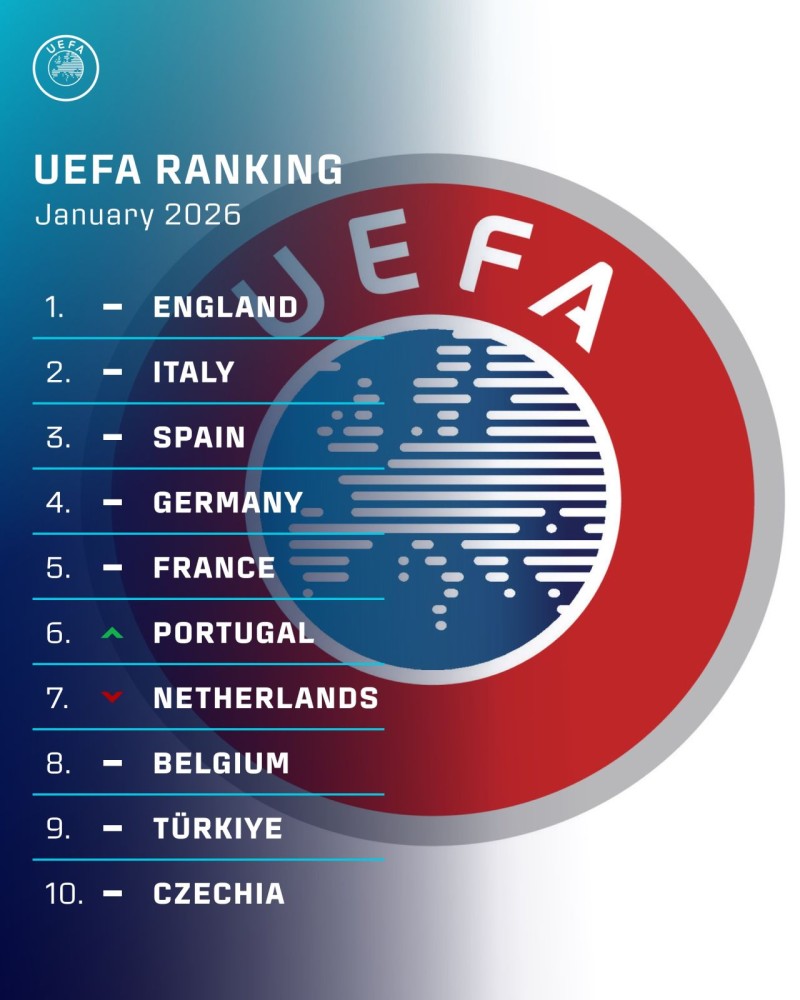
Portugal has just climbed back to 6th place in the UEFA country ranking, officially known as the UEFA association club coefficient. After dropping out of the Top 6 in 2023, this return is more than a symbolic win. It highlights how consistency, planning, and performance at club level directly shape a country’s position in European football.
The UEFA ranking is often mentioned by fans, pundits, and federations, but rarely explained properly. Yet it plays a decisive role in European qualification, financial sustainability, and long-term league competitiveness.
Let’s break it down clearly.
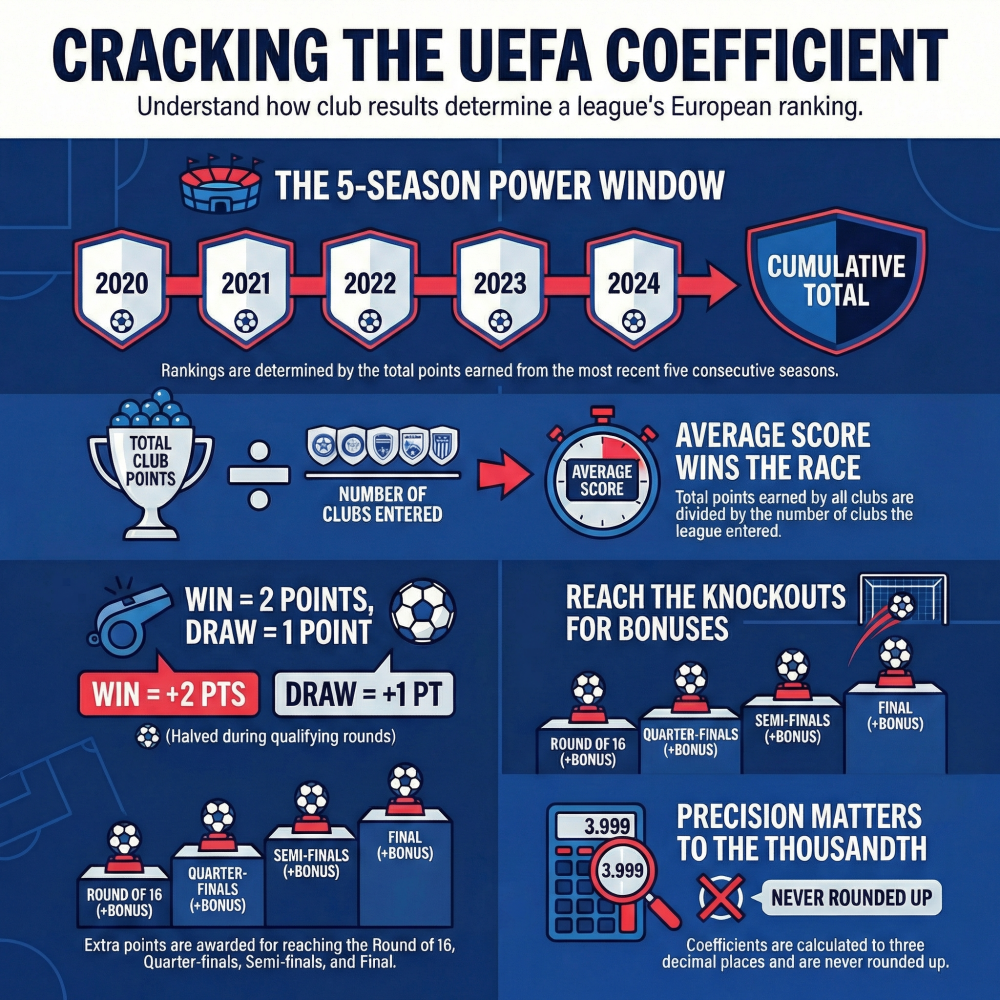
The UEFA country ranking measures how well clubs from each national league perform in European competitions over a five-season period.
It includes results from:
• UEFA Champions League
• UEFA Europa League
• UEFA Europa Conference League
This ranking has nothing to do with national teams. It is entirely based on club performances in Europe.
Each season, clubs earn points for:
• Match wins and draws
• Qualification to group stages
• Progressing through knockout rounds
These points are added together and averaged per country. The rolling five-year window means the system rewards sustained performance, not short-term success.
In European football, consistency beats moments. The UEFA ranking reflects that reality.
The UEFA coefficient is not a vanity metric. It has real, structural consequences for leagues and clubs.
A higher ranking means:
• More clubs qualifying for European competitions
• Direct access to group stages, avoiding early qualification rounds
• Increased broadcast exposure and prize money
• Stronger appeal to players, sponsors, and investors
• Greater stability for clubs planning multi-season strategies
For leagues outside the traditional “Big Five”, this system is often the difference between growth and stagnation.
Portugal has consistently performed above its economic size in European football, driven by the continental success of SL Benfica, FC Porto, and Sporting CP.
However, competition has intensified. Dutch, Belgian, and Turkish clubs have significantly improved their European results in recent seasons, pushing Portugal briefly out of the Top 6 in 2023.
As of January 2026, Portugal is back in 6th place in the UEFA country ranking.
This recovery reflects:
• Stronger group-stage performances
• Points earned across all three UEFA competitions
• Contribution from multiple clubs, not just one standout run
That last point matters more than most people realize.
Because the ranking is calculated over five seasons, one exceptional year is never enough.
Clubs and federations understand this well:
• One strong season helps
• Two poor seasons hurt
• Three weak seasons can cost a country direct European access
The system forces leagues to think long term. Squad planning, financial discipline, infrastructure investment, and operational maturity all become competitive advantages.
This is not accidental. UEFA’s ranking model is designed to reward sustainable football ecosystems, not one-off surprises.
The impact of the UEFA country ranking goes far beyond the biggest clubs.
When a country climbs the rankings:
• Smaller clubs gain access to European competitions
• Fewer qualification rounds reduce costs and risk
• Earlier exposure increases revenue and visibility
• Domestic leagues become more competitive overall
In practice, collective performance matters more than individual glory.
When one club wins in Europe, the entire league benefits. That’s the core logic behind UEFA’s ranking model.
This is why leagues that invest in shared standards, governance, and operational excellence tend to outperform those that rely on isolated success stories.

A stronger UEFA ranking usually means more European football for a country’s clubs.
That is good news commercially, but it also creates more operational pressure. More European matches mean more planning, more inspections, more reporting, more stakeholder coordination, and more matchday requirements across different venues.
For clubs, leagues, and federations, this matters because European football is not only about performance on the pitch. It also depends on how well each venue can prepare, deliver, and document the event.
Typical operational challenges include:
This is where digital event operations become important.
With tools for event monitoring and event reporting, clubs and federations can work from a shared source of truth. Teams can see what is happening, where it is happening, who is responsible, and what still needs to be resolved before matchday.
That level of control becomes even more valuable when clubs are playing more European fixtures, working with international stakeholders, and operating under higher delivery standards.
A country's UEFA ranking does more than determine European qualification spots. It directly shapes the operational complexity facing stadiums, clubs, and federations throughout the season.
The higher a country ranks, the more clubs it sends into UEFA competitions. More clubs in European competition means more high-stakes matches, more fixture congestion, and more pressure on venues to operate at UEFA standard, repeatedly, across the same season.
For stadium operators, this translates into a significant increase in event frequency and scrutiny. UEFA matches carry specific requirements around crowd management, access control, incident documentation, and post-event reporting that go beyond what domestic fixtures demand. Venues that host three or four European matches a season face a very different operational reality than those hosting one.
For federations, the challenge is coordination at scale. As more national clubs advance through qualifying rounds, they must maintain oversight across multiple venues simultaneously, tracking assets, managing staff deployment, and ensuring compliance standards are met consistently, not just at flagship stadiums.
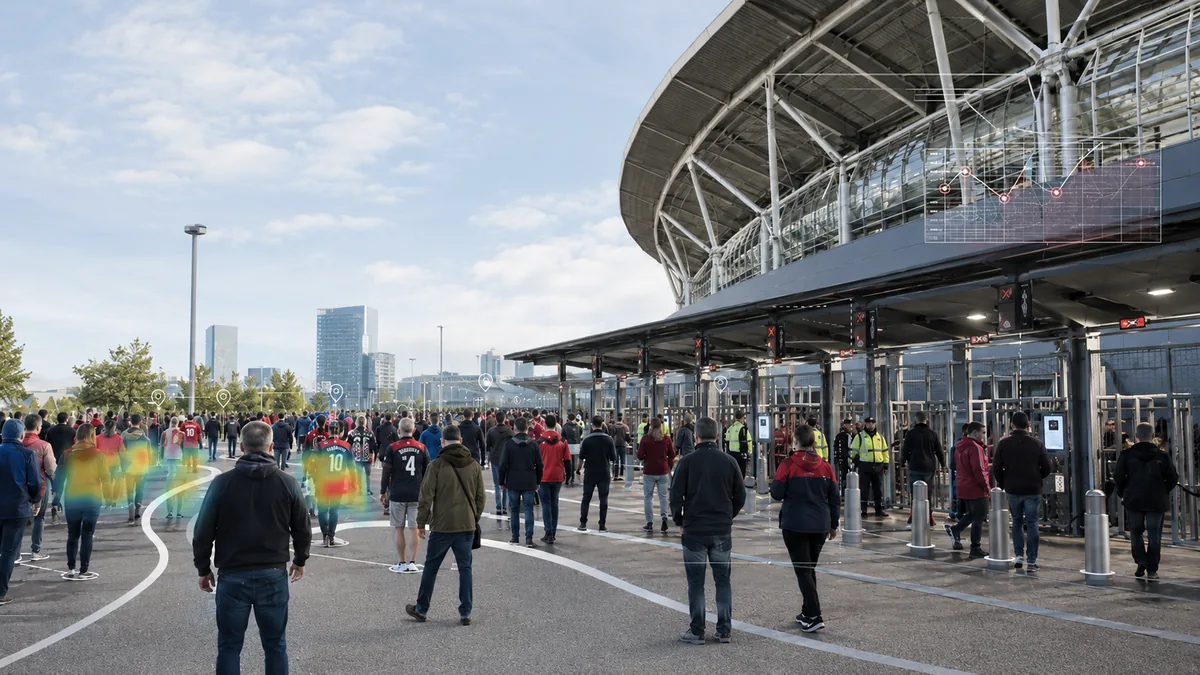
For clubs, the data generated across a UEFA campaign, such as crowd flow patterns, incident logs, asset usage, overlay performance, becomes a strategic asset if captured correctly. Most clubs are still managing this manually or across disconnected systems, which creates gaps precisely when event monitoring matters most.
The rankings, in other words, are not just a football metric. They are a proxy for operational demand and the countries climbing the table are the ones whose venues and federations will feel that pressure most acutely in the seasons ahead.
I’ve been fortunate to attend several UEFA Champions League Finals over the years. They are unforgettable experiences, both emotionally and operationally. Yet I’ve never seen a Portuguese club play a Champions League final live, in person.
Will that change soon?
Portugal’s return to 6th place is worth celebrating, but staying there will require discipline, planning, and continued consistency from multiple clubs.
Because success in Europe is not decided only during the 90 minutes on the pitch.
It is shaped by the systems, structures, and decisions made long before kickoff.
Remember, elite clubs don’t just win matches, they deliver world-class events and the operational standard of the venue matters more than most fans realize. If you want a concrete example of how that looks in practice, read my article "Wembley Stadium is a masterclass in stadium operations management".
The ranking determines how many clubs qualify for European competition, which directly increases the number of UEFA-standard matches a country's stadiums must host. More European fixtures means more complex crowd management, stricter compliance requirements, and higher operational frequency across the season.
UEFA requires host venues to meet specific standards for safety documentation, incident reporting, and post-event data, and to produce structured reports on demand. Venues that rely on manual processes or fragmented systems struggle to meet these requirements consistently across multiple fixtures. Event reporting becomes critical when documentation needs to be produced quickly and accurately.
A virtual venue is a digital replica of a physical stadium used for pre-event planning, overlay design, and operational briefings, allowing teams to map crowd flows, position assets, and align staff before the event day. It reduces preparation time and coordination errors for high-complexity UEFA fixtures.
Behind every successful competition is a well-designed operational system that connects venues, teams, and stakeholders in one shared environment.
See How Virtual Venue WorksThe UEFA country ranking, also called the UEFA association club coefficient, ranks countries based on how their clubs perform in European competitions over five seasons.
Clubs earn points for wins, draws, and progression in UEFA competitions. These points are averaged per country across a five-year rolling period.
No. The ranking is based exclusively on club performances in the Champions League, Europa League, and Conference League.
Higher-ranked countries receive more European spots and direct group-stage entries, reducing qualification rounds and increasing revenue.
The ranking is updated after every round of European matches and recalculated continuously throughout the season.
Yes. Consistent performances by multiple clubs across several seasons can significantly improve a country’s ranking and European access.
Latests from our Blog
See Virtual Venue in action
Streamline planning, enhance execution, and stay in full control with Virtual Venue.
Book a demo today and see how we can help optimize your events.
Get in Touch
All Rights Reserved © Virtual Venue











.svg)
.svg)
