Stadium Event Planning and Operations Tools: What to Look for?
Ask AI about this article.webp)

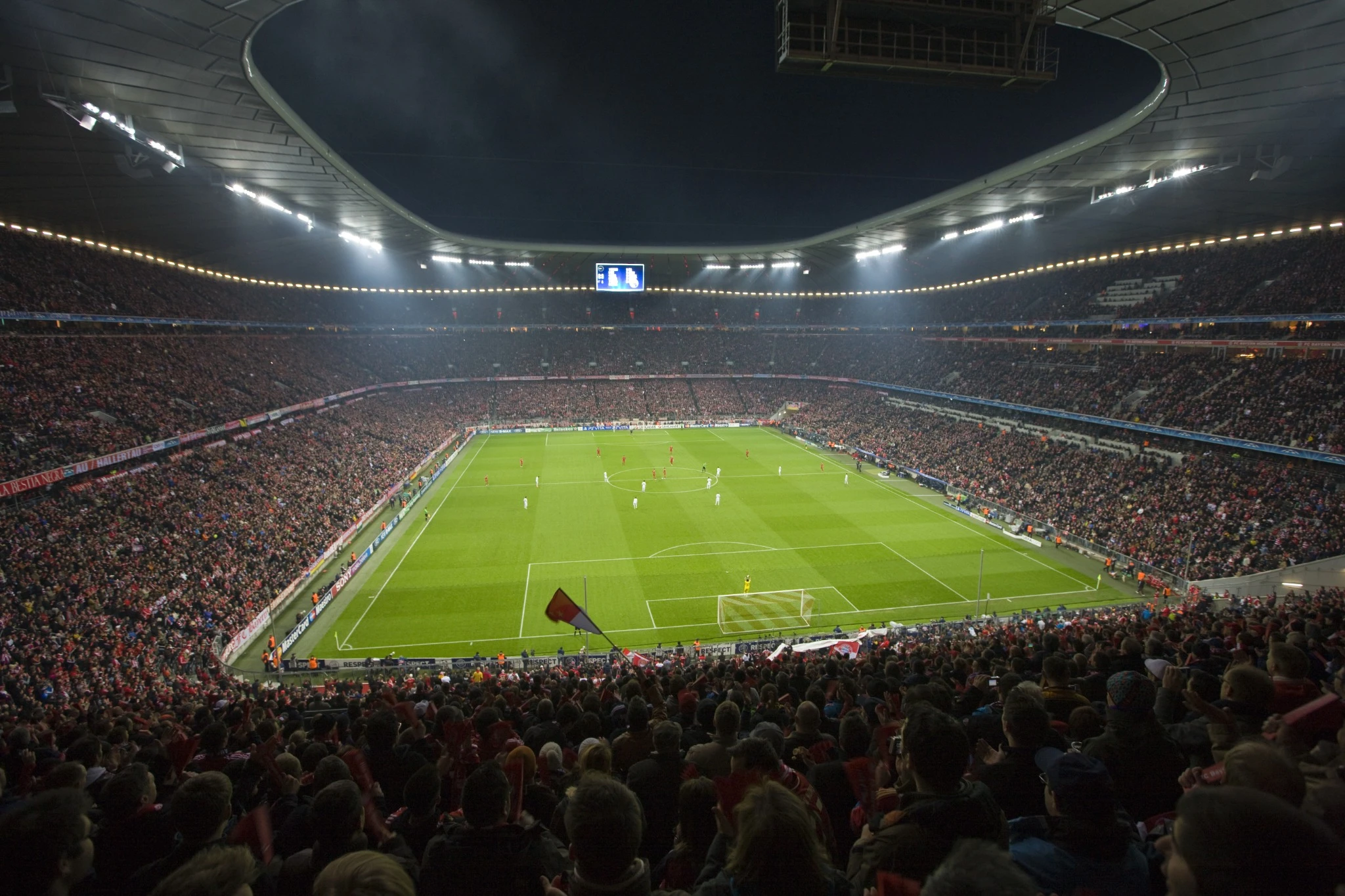
Stadiums are the core of major events, from thrilling sports competitions and electrifying concerts to international summits. These colossal venues host thousands, sometimes tens of thousands of attendees, demanding complex planning, resource management, and operational precision.
Delivering seamless events in such high-stakes environments isn’t easy. Organizers must tackle challenges ranging from logistical bottlenecks to safety concerns, all while striving for sustainability and fan satisfaction. To achieve this, stadium event planning tools have become indispensable.
In this blog post, we explore the critical features of these tools, why they matter, and how they can elevate your planning game to new heights.
Unlike generic venues, stadiums pose unique challenges:
Without the right tools, these challenges can lead to miscommunication, inefficiencies, and even safety risks. Stadium event planning software empower teams to:
By automating and streamlining processes, these tools become the backbone of event success.
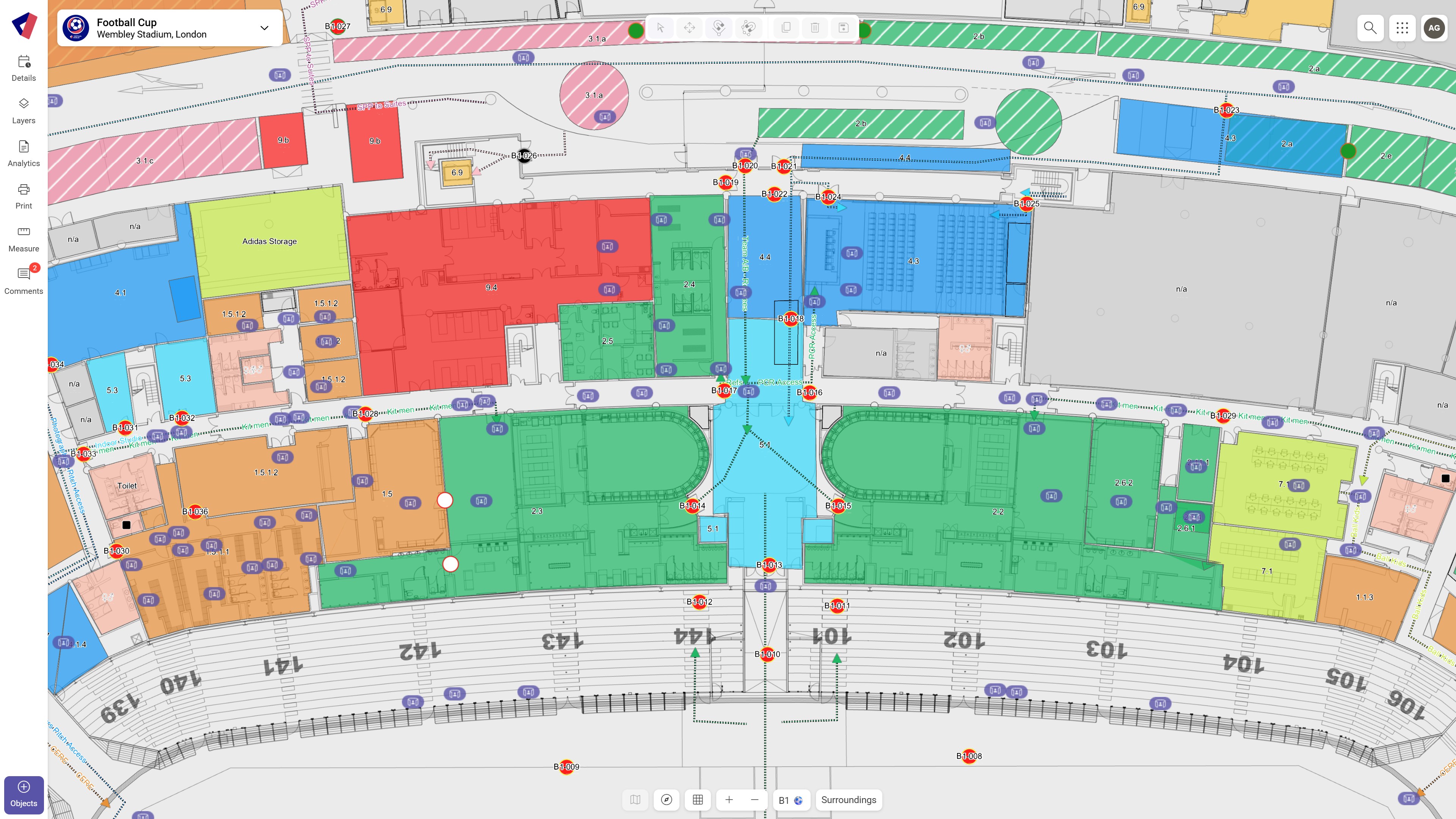
The ability to visualize how a stadium will be utilized during an event is critical. Overlays not only guide the placement of vendors and seating arrangements but also ensure that emergency pathways and VIP areas are clearly defined.
What to look for:
Consider a major music festival in a stadium. A layout tool can map out: Stage placement, lighting rigs, and sound systems; VIP lounges, general admission areas, and press zones; Food trucks, merchandise stalls, and medical stations.
These overlays also allow security personnel to visualize crowd flow, preventing bottlenecks and ensuring efficient evacuations if needed..
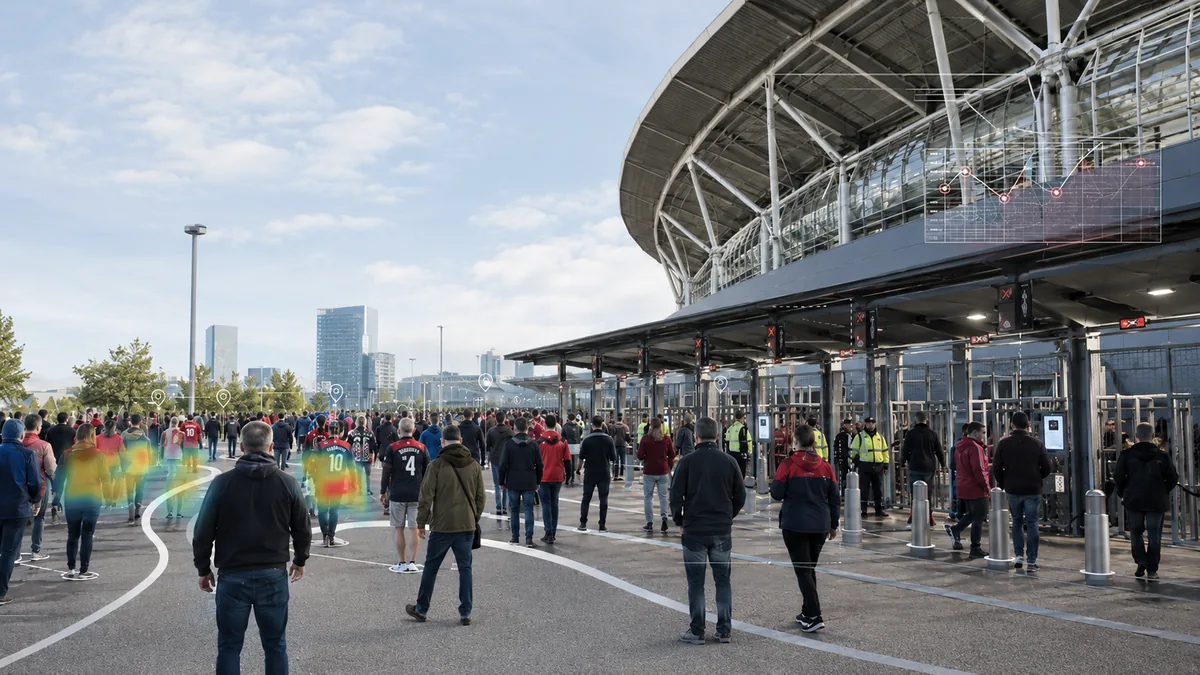
Stadium events are defined by the flow of large crowds. Tools with powerful crowd management features ensure safety, reduce congestion, and provide a smooth experience for attendees.
What to look for:
Some tools now offer touchless check-in systems using facial recognition or QR codes, enabling fast and secure entry. Combined with mobile apps, attendees can be directed to the nearest entry gate based on real-time data, significantly reducing queues.
.webp)
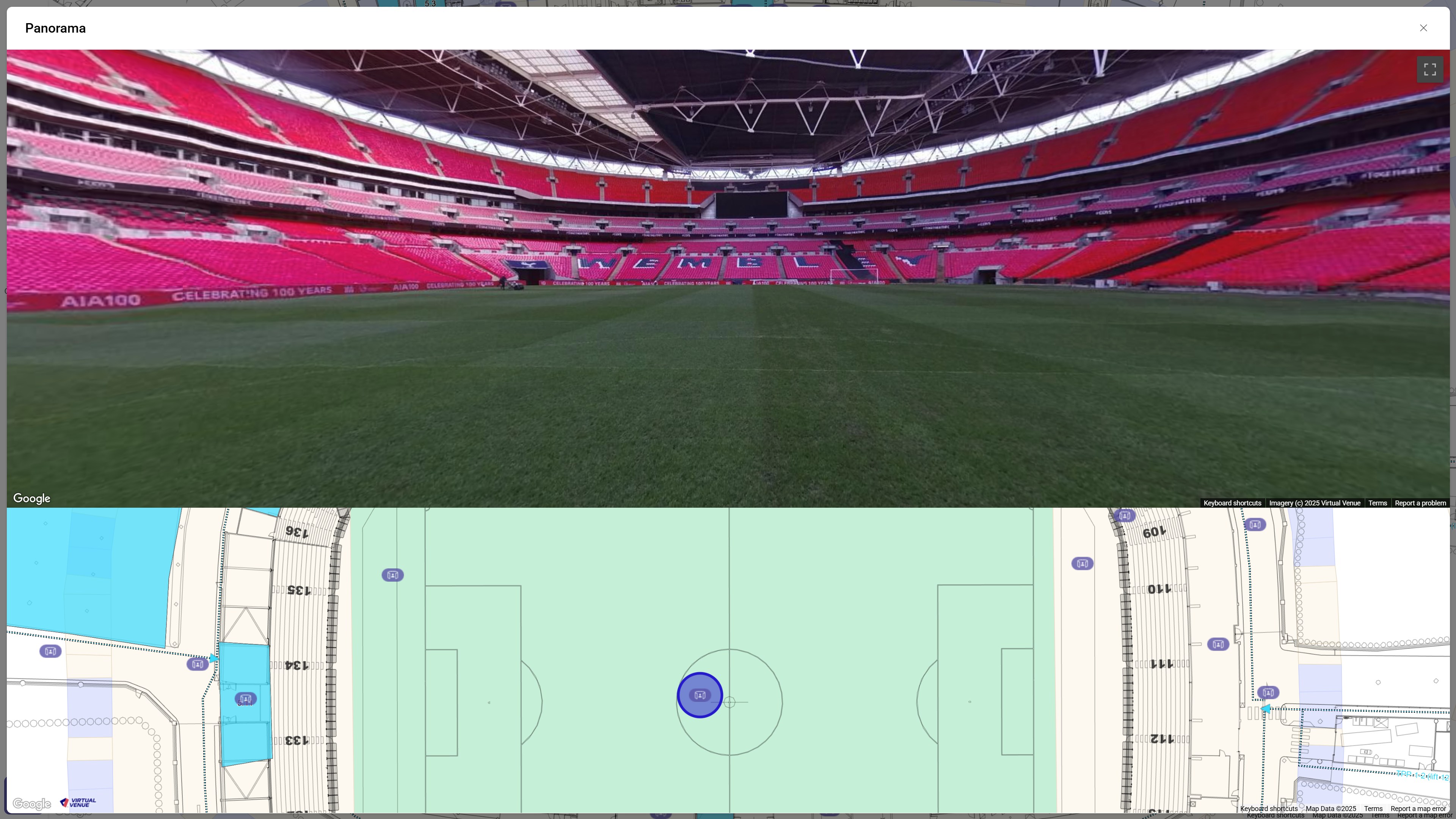
Digital twins replicate the physical stadium in a virtual environment, allowing teams to plan and simulate events without stepping on-site. This technology has been transformative for stadium operations, particularly for multi-use venues.
What to look for:
For example, digital twins allow planners to run crowd simulations to optimize evacuation routes or predict traffic congestion outside the venue..
Site visits are integral to pre-event preparation, ensuring the stadium is fit for purpose. Tools that streamline reporting and inspections can save hours of manual work while improving accuracy.
What to look for:
Some platforms even allow cross-referencing with historical data, enabling teams to identify recurring issues and address them preemptively.

From technical equipment to crowd barriers, managing physical assets is vital for any stadium event. A strong asset management system ensures nothing is overlooked.
What to look for:
Additionally, advanced systems now provide geolocation tagging for assets, enabling teams to find misplaced items in sprawling venues efficiently.
Even the best-laid plans can face disruptions. Whether it’s a power outage, unruly crowd behavior, or a security threat, having a robust incident management system is critical.
What to look for:
In high-pressure environments, tools with machine learning capabilities can even predict incidents, such as equipment failure or overcrowding, based on historical patterns.
Logistics are the lifeblood of stadium operations. Managing the inflow and outflow of resources, from equipment to catering supplies, requires robust systems that track every detail.
What to look for:
Advanced logistics tools now incorporate AI-driven demand forecasting. For example, they can predict how much food and beverage inventory is needed based on previous event attendance, saving costs while preventing shortages.
Additionally, integrated GPS systems enable planners to monitor delivery trucks en route, helping them adjust for unforeseen delays. When these tools are combined with location-based services, organizers gain a clear picture of the logistical flow throughout the event.
Sustainability isn’t just a buzzword. It’s a necessity. Events that prioritize eco-friendly practices are not only socially responsible but also cost-efficient.
What to look for:
By choosing tools that prioritize virtual planning and remote collaboration, you can reduce emissions associated with travel and on-site coordination.
Ultimately, the success of a stadium event hinges on fan satisfaction. Tools that cater to attendees’ needs can transform their experience and build loyalty.
What to look for:
For example, stadium apps can offer seat-specific food delivery options, reducing the hassle for attendees while boosting concession sales.
As stadiums host increasingly diverse events, tools must scale to meet varying demands.
What to look for:
Stadium event planning is a delicate balance of creativity and precision, a combination of art and science. Every decision, from logistics to fan engagement, has a ripple effect on the overall experience. With the stakes so high, having the right tools in place is no longer optional; it’s a must-have. These tools enable planners to streamline operations, maximize ROI, contributo to sustainability, and deliver events that leave a lasting impression on attendees, sponsors, and stakeholders alike.
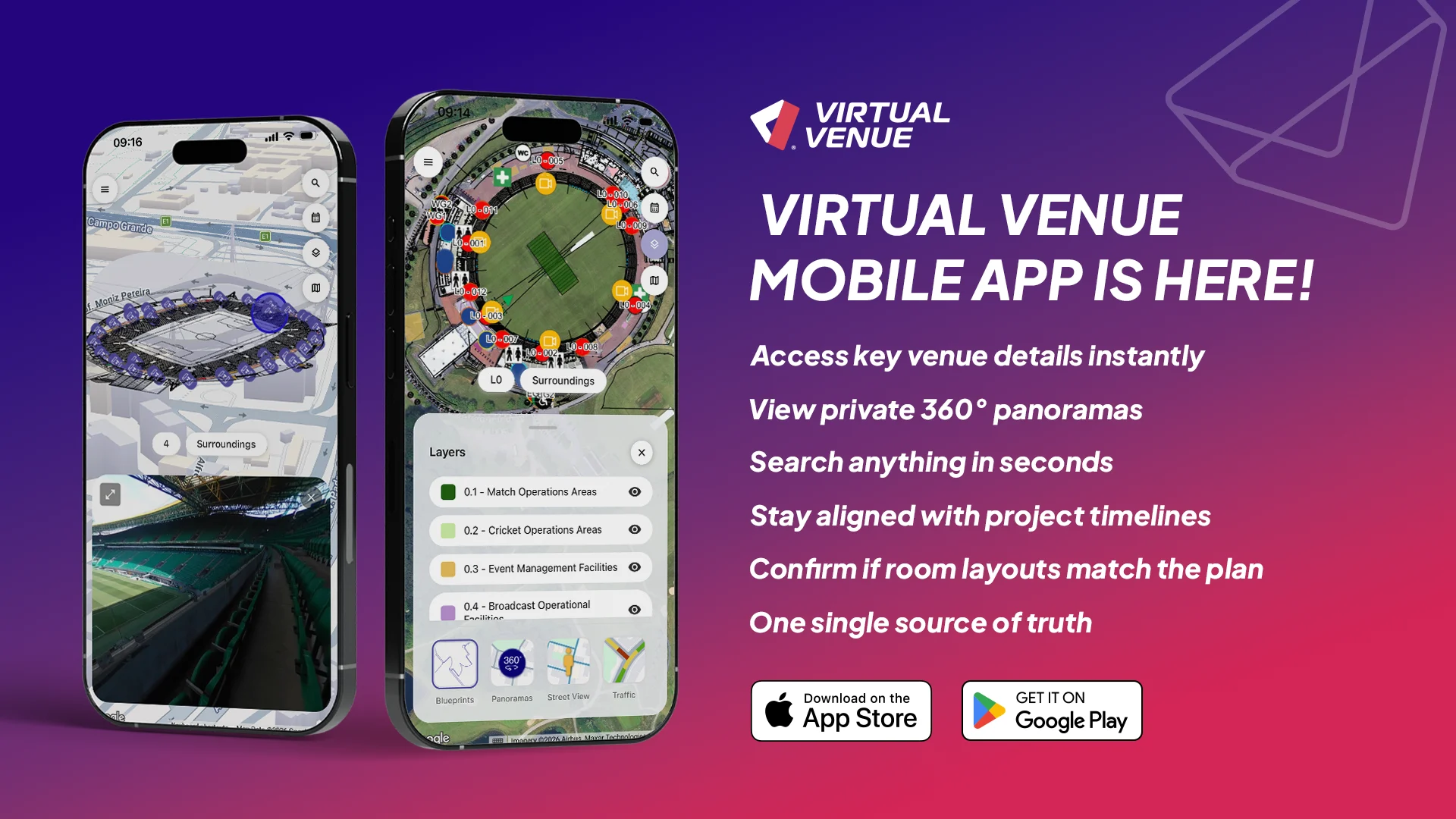
Among these cutting-edge platforms, Virtual Venue stands out as a transformative solution for stadium event planning and operations. Our map-centric, collaborative tool empowers planners to optimize every aspect of the event lifecycle, from the initial site visit to post-event reporting. Here’s why Virtual Venue is redefining the future of stadium operations:
At Virtual Venue, we pride ourselves on being more than just a software provider, we’re a partner in your success. We don’t just offer a platform, we work alongside you, understanding your unique challenges and goals to help you fully leverage the platform’s potential. From onboarding and training your team to refining workflows, our commitment goes beyond implementation.
We actively collaborate with our clients, ensuring they feel supported every step of the way. Your feedback and insights help shape our roadmap, ensuring Virtual Venue evolves in alignment with your needs. Whether it’s fine-tuning overlays, expanding asset management capabilities, or introducing new analytics, we’re continuously improving the platform to make it the most effective tool in your arsenal.
By partnering with Virtual Venue, you gain more than a product, you gain a team committed to innovation, collaboration, and your long-term success. Let us help you set the stage for unforgettable events and transformative results.
Request DemoStadium event planning tools are software platforms that help organizers plan, coordinate, and run large-scale events in stadiums. They typically combine venue layouts, stakeholder collaboration, operational workflows, reporting, and real-time monitoring to reduce risk and improve execution.
Stadium events involve high crowd volumes, complex security requirements, and many stakeholders (venue ops, promoters, broadcasters, vendors, police, transport). Dedicated tools centralize information, reduce miscommunication, and help teams manage fast-changing situations with clearer accountability.
Key features include venue overlays and layout planning, crowd flow and access control, digital twin visualization, site visit reporting, asset management, incident management, logistics tracking, dashboards/analytics, and integrations with ticketing, security, and venue systems.
A digital twin provides a map-based virtual model of the stadium where teams can plan overlays, zones, routes, and operations collaboratively. It reduces the need for repeated site visits, improves accuracy, and supports scenario planning—especially useful for multi-use venues hosting matches and concerts.
They help design entry/exit routes, define perimeters, model crowd flow, and monitor congestion using real-time signals (when integrated). This supports faster interventions, better staffing deployment, shorter queues, and safer movement across gates, concourses, and evacuation routes.
Site visit reporting is the process of inspecting and documenting venue readiness before an event—often using checklists, photos, and action points. Modern tools make it digital and location-based, so issues are tied to exact areas of the stadium and tracked to resolution.
Stadium events require thousands of assets (barriers, signage, broadcast kit, hospitality setup). Asset management tools reduce last-minute supplier costs, prevent duplication, ensure correct placement, and improve accountability by tracking what’s needed, where it goes, and who owns it.
Incident management tools let teams log issues in real time, geotag them on the venue map, assign owners, attach evidence (photos/notes), and track resolution. This improves response times during event day and creates a clear record for post-event reporting and learning.
Look for API integrations with ticketing/access control, security/CCTV platforms, mobility/traffic data, workforce tools, asset/inventory systems, and reporting dashboards. Integrations reduce manual updates and keep all stakeholders aligned on one operational view.
Start with your highest-risk needs (crowd flow, compliance, multi-stakeholder coordination), then evaluate platforms on usability, speed, map accuracy, reporting workflows, integrations, scalability across venues, and the ability to support the full event lifecycle, not just one phase. Here's out list of the best stadium event planning software.
Latests from our Blog
See Virtual Venue in action
Streamline planning, enhance execution, and stay in full control with Virtual Venue.
Book a demo today and see how we can help optimize your events.
Get in Touch
All Rights Reserved © Virtual Venue











.svg)
.svg)
