Smart Stadium Operations: 2026 Guide
Ask AI about this article

Modern stadium operations are under pressure from every direction: less time to prepare, more stakeholders, higher safety expectations and constant last-minute changes. At the same time, event organizers and venue managers are being asked to do more with the same (or leaner) teams, while keeping operations consistent, compliant and cost-efficient.
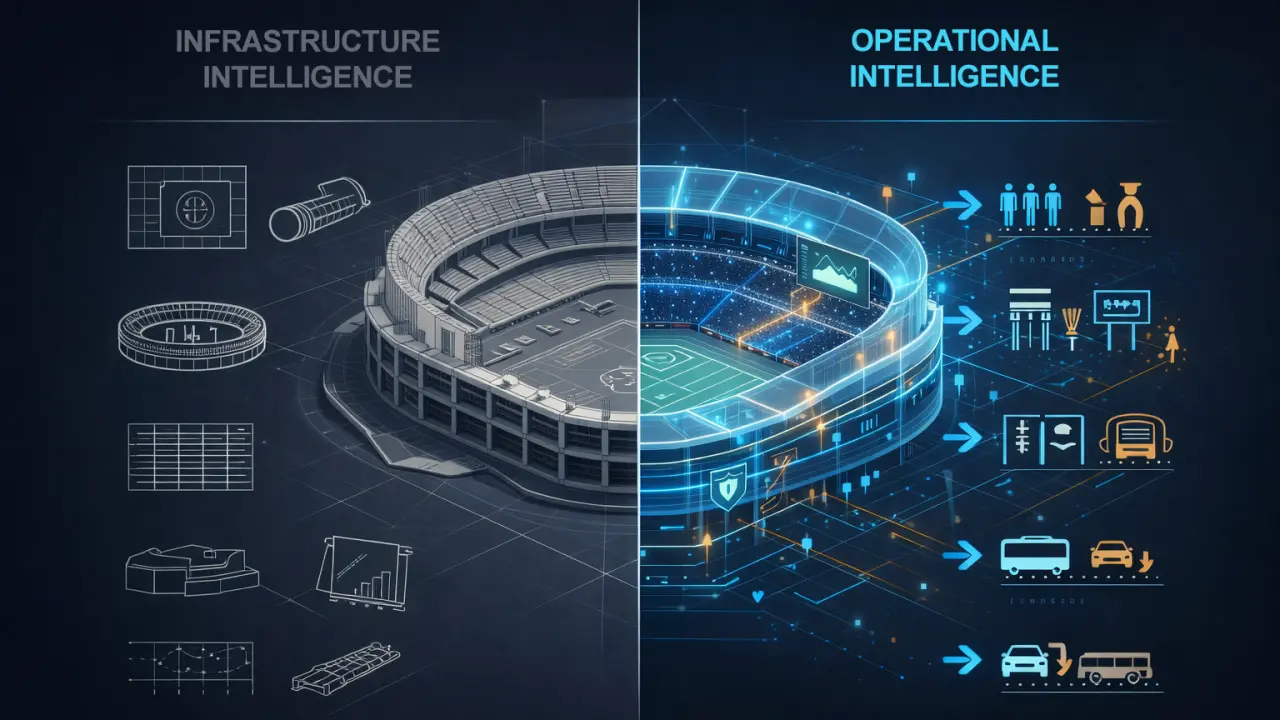
That’s where the next generation of sports venue management software comes in. With platforms like Virtual Venue, it’s no longer just about bookings or resources. It’s about giving every stakeholder a shared operational intelligence of the venue, so plans are easier to coordinate and deliver on the ground.
Smart stadium operations depend on one thing: coordination. When teams are not working from the same plan, small changes quickly turn into missed updates, duplicated work, and avoidable risk. Digital tools solve this by connecting three layers of delivery: planning, on site execution and reporting.
In this guide, we’ll look at the operational challenges large venues face in 2026, what modern tools need to support (from overlays and workforce coordination to safety workflows and inspections) and how leading sports events are building repeatable operational processes.
When everyone is aligned, delivery feels smooth. When alignment slips, even small details can ripple into delays, extra work, and unnecessary stress on event day.
For stadium owners and venue operators, complexity is not limited to one event. It is constant. Internal departments, tenants and commercial partners, third party suppliers, and external authorities all interact with the same infrastructure week after week.
Everyone still needs one shared operational picture that is easy to follow and easy to update, so teams can see what is live, what has been approved, and what has shifted since the last version. When information sits across multiple tools and formats, the venue team ends up acting as the bridge, and alignment becomes harder than it should be.
Spreadsheets, PDFs, email threads, and messaging apps can keep things moving, but they also create rework and blind spots. Tasks get duplicated, updates get missed, and teams spend time chasing information instead of acting on it. Over time, that slows down operations and increases pressure, especially in venues with frequent event turnover.
In stadium delivery, change is normal. The challenge is managing it without confusion. If a gate schedule shifts, a zone becomes restricted, or a compound layout changes, everyone affected needs that update immediately and in the right context. Otherwise teams arrive on site working from yesterday’s plan, and the fix becomes reactive instead of controlled.
Most operational questions start with where. Which entrance, which corridor, which room, which route, which zone. When planning tools are not anchored to the stadium layout, teams spend time translating instructions into real world context. That slows down coordination and increases the risk of misinterpretation, especially across external partners.
Inspections, readiness checks, handover and handback, and incident processes need consistent capture and clear sign off. When reporting is fragmented or manual, it becomes harder to verify what was checked, what is still open, and who approved what. Over repeated events, that inconsistency makes improvement harder and confidence lower.

The best stadium event planning tools don’t add complexity, they remove it. The right setup connects planning, on site delivery, and reporting into one workflow so teams spend less time aligning and more time executing.
Strong stadium venue planning is visual, collaborative and reusable. It should be easy to understand across departments and partners, not only by the person who created the plan.
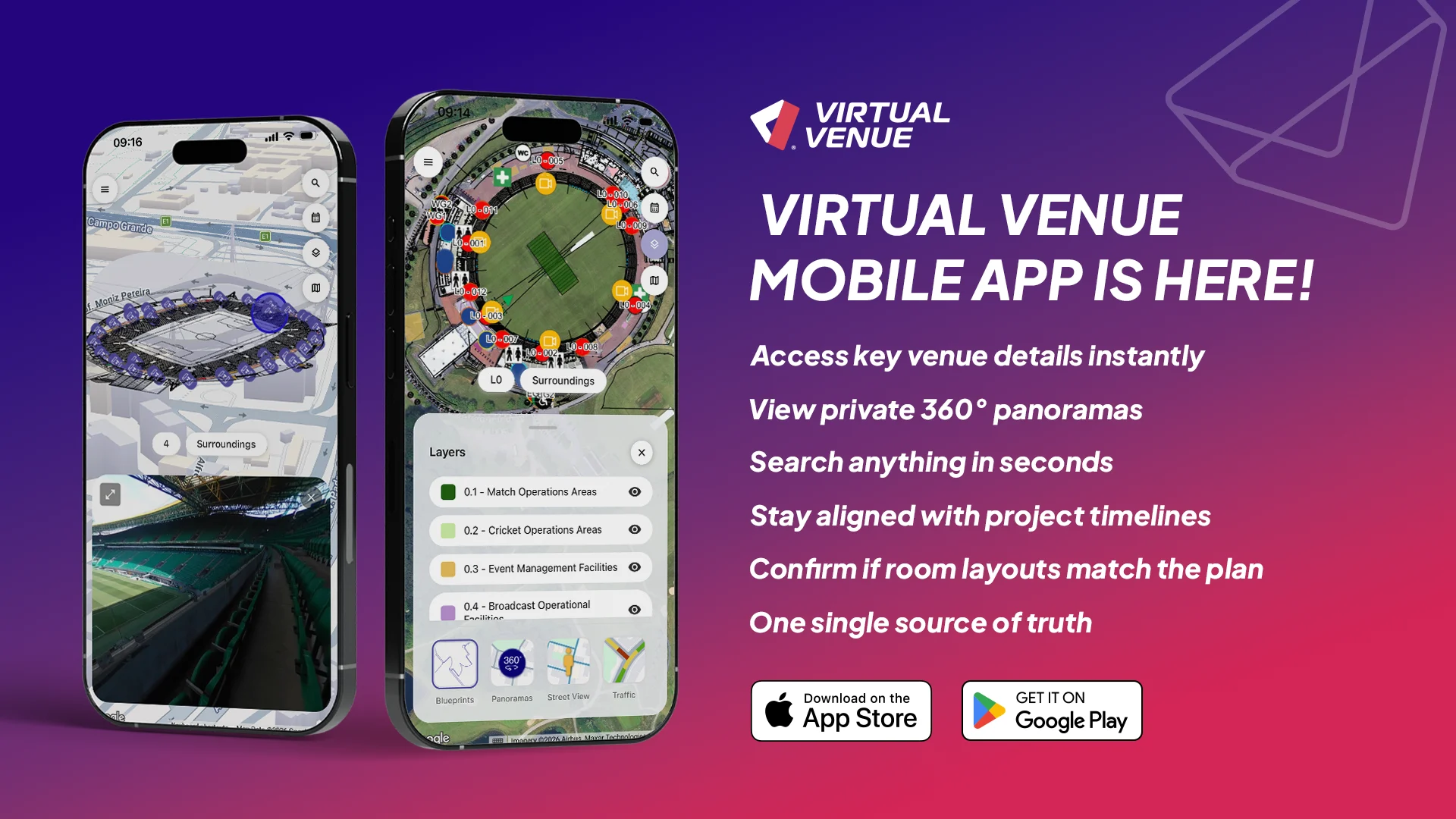
The most effective approach is a shared, map based view of the venue, where teams build the event overlay together. This is exactly what we enable in Virtual Venue. Teams plan directly on a digital twin of the site, using a simple drawing toolkit to mark zones, routes, restricted areas, and key operational points, so every stakeholder is working from the same operational picture. That shared view helps everyone align on how spaces will be used, what changes for the event, and what needs attention before doors open.
A stadium event management system today should help teams move from planning into on site delivery without losing context. That means clear ownership, clear status and a structured way to close tasks and issues. The capabilities that matter most are:
This is where sports venue management software proves its value, not in storing documents, but in keeping teams aligned while the event is being delivered.
Reporting often gets treated as an afterthought, pulled together from notes, photos, and scattered updates once the event is already moving. The best systems build reporting into delivery, so inspections, checklists and sign offs are captured in real time and shared consistently across teams, with outputs that are ready for audits and easy to reuse for the next event.
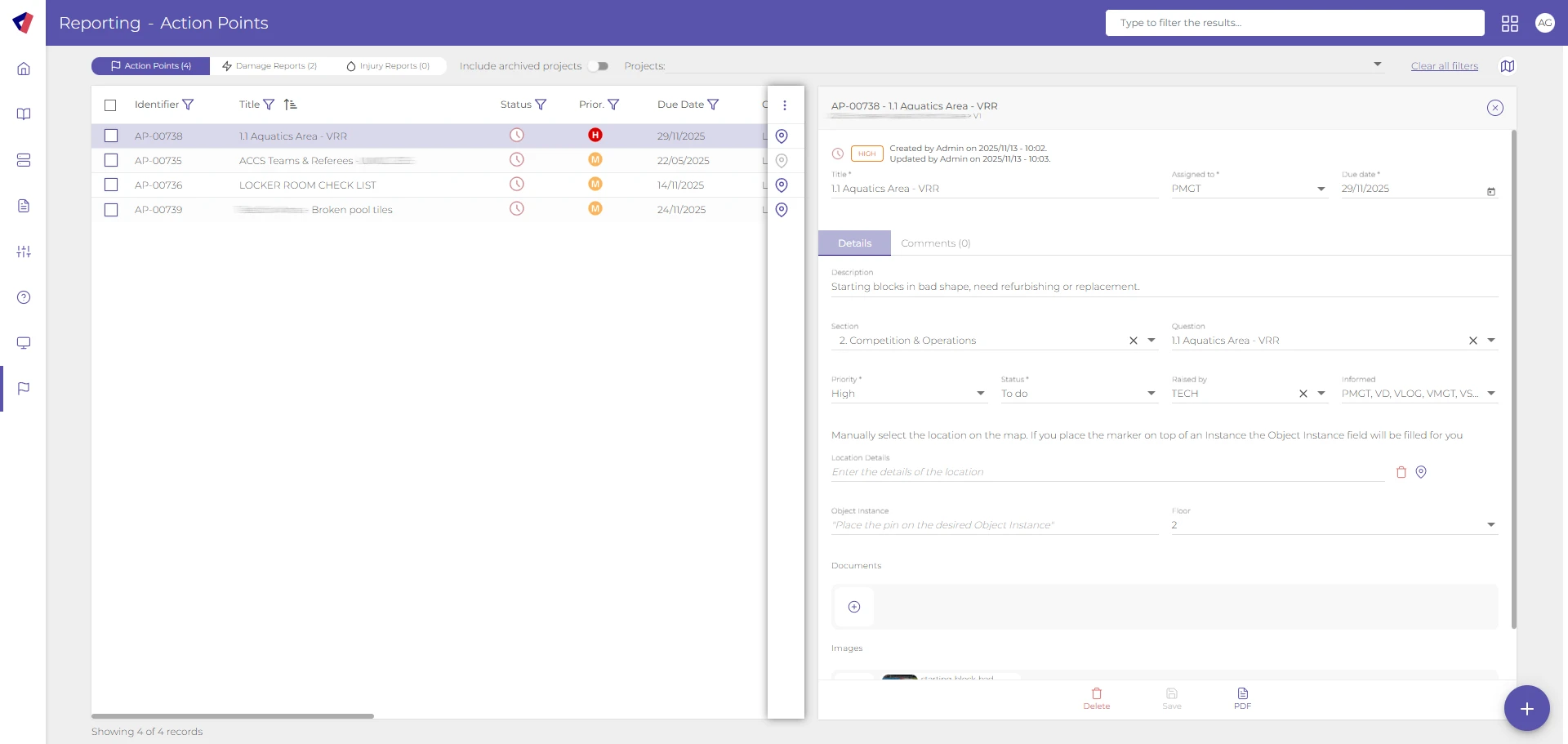
Software tools such as Virtual Venue should make reporting:
To see what this looks like in practice, visit our Event Reporting page.
Sustainability and cost efficiency in stadium operations are often driven by the same things. Clearer planning, less rework, and fewer unnecessary site visits. Digital workflows help because they make operations more consistent and more measurable, without adding admin.
We dive deeper into this topic in our article Sustainability in Sports Events Is No Longer Optional, where we look at the environmental impact behind large scale sports events and why sustainability has to be part of operational planning.
When everyone works from the same operational picture, teams spend less time reconciling versions and more time delivering. It reduces duplicated checks, repeated conversations, and last minute corrections that usually show up as extra cost on event week.
Operational data only helps when it is visible and comparable. Real-time dashboards and KPIs make it easier to see what is approved, what is blocked and what is still outstanding by zone or workstream, so teams can act earlier and handovers stay clean. This is exactly the role of tools like our real-time dashboards, which keep readiness and outstanding actions visible as delivery progresses.
The key is choosing KPIs that reflect operational reality, and tracking them consistently by zone, workstream, and event phase.
Stadium operations get complex in different ways. Sometimes the challenge is constant reconfiguration in one venue. Sometimes it is delivering consistency across multiple venues and countries. Sometimes it is scaling a standard approach across a packed international calendar. The Wembley Stadium, FIBA Basketball World Cup 2026, and the FIFA World Cup 2030, each reflect one of those realities.
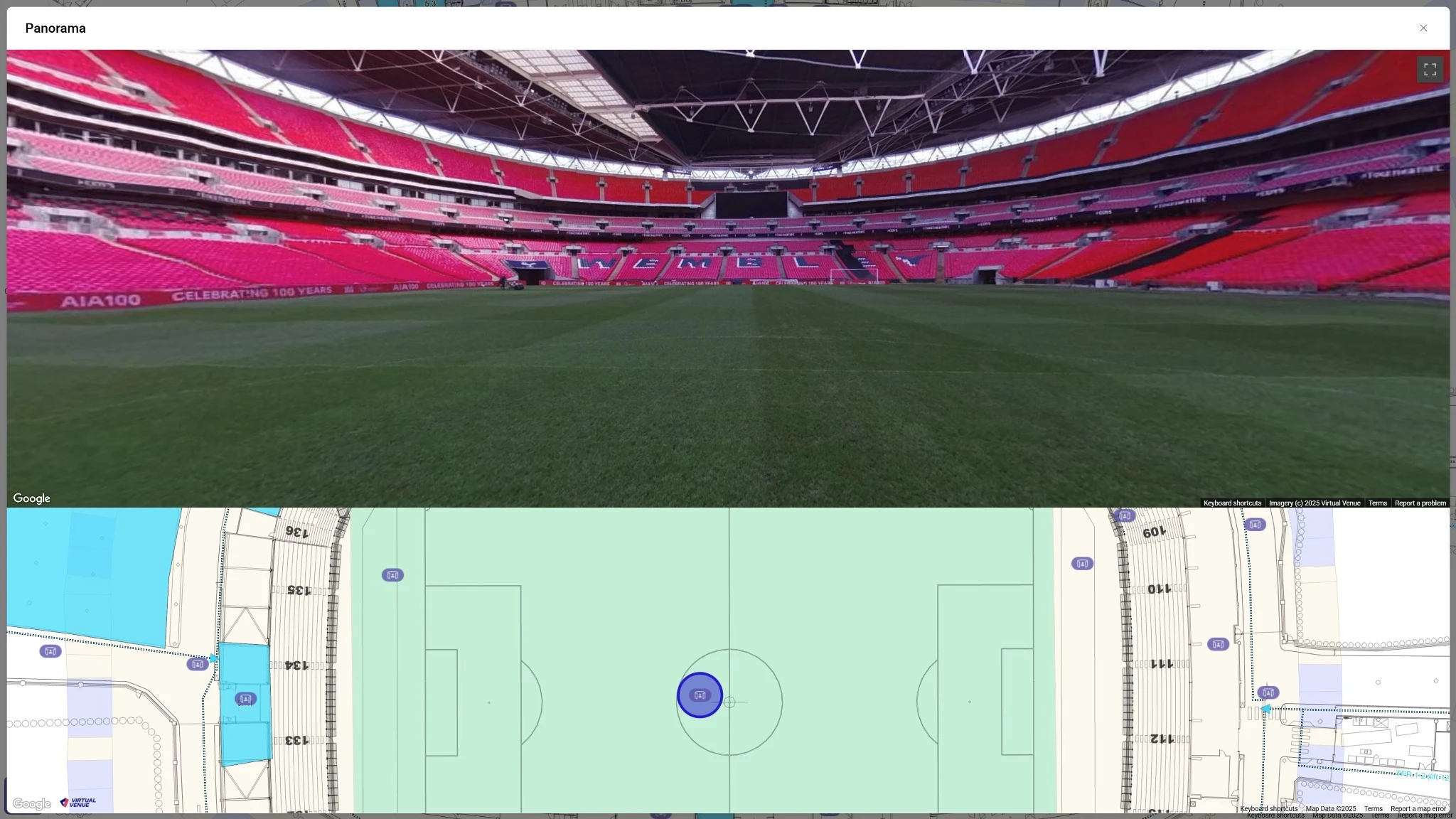
Wembley is a masterclass in stadium operations because it shows how much changes even when the venue stays the same. The same infrastructure can host a sold out football final one week and a headline concert the next, with different layouts, different crowd flows, and different operational priorities each time. The operational challenge is staying in control while adapting fast, especially around access and crowd flow planning, back of house logistics, and keeping multiple teams aligned on the same operational plan.
Wembley is a great example of these dynamics. Here is how Wembley shows what it takes for stadium operations to adapt across radically different event formats.
FIBA is the International Basketball Federation, the global governing body of basketball. It defines rules and requirements, specifies facilities and equipment standards, organises international competitions, and works with a worldwide network of national federations.
Operationally, FIBA’s calendar puts constant pressure on consistency. With major milestones such as the FIBA Women’s Basketball World Cup 2026 in Germany and the FIBA Basketball World Cup 2027 in Qatar, venue operations benefit from repeatable planning, standardised workflows, and structured reporting that can scale across venues and stakeholders. That is why FIBA partners with Virtual Venue, bringing a consistent approach to venue planning and event operations for the 2026 and 2027 World Cups.
The FIFA World Cup 2030 raises the bar because planning is multi venue and multi country. The Portugal, Spain and Morocco bid brings different venues, different local organising structures, and teams working across locations into one shared delivery effort. That makes consistency, traceability, and governance important from day one, not only during delivery.
We supported the bid with Virtual Venue, helping teams collaborate in a shared digital space from the bidding stage through to match day. The approach is built around digital twins and virtual planning, supporting cross team coordination and reducing the need for repeated site visits.
Smart stadium operations depend on one thing: keeping planning, on site delivery, and reporting connected, even as teams, partners, and requirements change from event to event. Virtual Venue supports that by bringing those workflows into one shared operational environment, built around a map based view of the venue.
We also see ourselves as more than a software provider. We work alongside venue teams to make the platform effective in real operations, from onboarding and training to refining workflows over time. Client feedback helps shape our roadmap, so the platform evolves with what teams actually need on the ground.
In practice, Virtual Venue supports smart stadium operations through:

The result is a smoother operation across events, clearer accountability across teams, and less friction when plans change. If you want a practical checklist for evaluating stadium planning and operations technology, our guide on stadium event planning and operations tools goes deeper into what to look for.
Put this guide into practice. Book a walkthrough of Virtual Venue for your venue team.
Talk to Our TeamIt means planning, on-site execution, and reporting are connected in one workflow, so changes propagate fast, accountability is clear, and readiness can be tracked in real time.
Venue management systems often focus on bookings and admin, while stadium event planning tools focus on operational delivery, including overlays, workflows, and multi stakeholder coordination.
Stadiums and other types of venues face:
They connect three layers:
They reduce rework and unnecessary site visits by improving planning clarity, enabling remote coordination, and keeping reporting and approvals consistent across events.
Common roles include:
They give teams a shared venue view to plan overlays, test layouts, and align stakeholders remotely, reducing miscommunication and helping limit avoidable site visits.
It works best when captured on site using structured checklists and evidence, tied to specific areas of the venue, so outputs stay consistent and audit ready across events.
A practical set includes inspection completion by zone (e.g., stand, gate), open actions by severity, response time from issue creation to resolution, required sign-offs completed, and overall readiness by zone or workstream.
Latests from our Blog
See Virtual Venue in action
Streamline planning, enhance execution, and stay in full control with Virtual Venue.
Book a demo today and see how we can help optimize your events.
Get in Touch
All Rights Reserved © Virtual Venue













.svg)
.svg)
