FIBA partners with Virtual Venue for Basketball World Cups 2026 and 2027
Ask AI about this article

FIBA, the International Basketball Federation and the global governing body for basketball, has selected Virtual Venue as its official platform for venue planning and event operations. This is a decisive move towards efficiency, sustainability, and digital transformation at the heart of some of the world’s biggest basketball tournaments.
After a successful debut collaboration during the FIBA Basketball World Cup 2023 in the Philippines, Japan and Indonesia, the federation is now fully adopting Virtual Venue for its flagship competitions:
- FIBA Women’s Basketball World Cup 2026 (Germany)
- FIBA Basketball World Cup 2027 (Qatar)
Virtual Venue will become a core operational platform across FIBA’s event ecosystem. See how we support international sports federations.

FIBA (Fédération Internationale de Basketball) is the international federation responsible for overseeing and organising world basketball competitions. Recognised by the International Olympic Committee, it governs the rules of the sport, international tournaments, and global rankings.
Founded in 1932, FIBA is headquartered in Switzerland and operates competitions including:
Before committing to a long-term partnership, FIBA evaluated what truly matters in modern event delivery: clarity, consistency, and control at scale. With operations becoming increasingly complex and spanning multiple countries, it was evident that traditional tools could no longer keep pace.
What they needed was a centralized, collaborative, and future-ready platform. That’s where Virtual Venue proves its value.
"We’re excited to embark on this project after our successful cooperation around the last World Cup. We’re looking forward to exploiting the full potential of this powerful online venue planning solution, ensuring we have one source of truth and a standardised planning approach for all stakeholders across the event organization, while leveraging the many functionalities and possibilities the platform provides." Ashley Green, FIBA Head of Events
Standardization across borders
With events spanning multiple countries and continents, FIBA required a single source of truth for all venue planning. Virtual Venue enables:
Efficient, digital-first operations
Virtual Venue replaces outdated methods such as spreadsheets, emails, and paper-based plans. The platform streamlines:
Alignment with sustainability goals
By centralizing planning in a digital environment, FIBA is able to significantly reduce:
1. Women’s Basketball World Cup 2026 – Germany
FIBA is committed to delivering a seamless, athlete-first experience in one of Europe’s most advanced sports markets. With Virtual Venue, organizers will be able to:
2. Men’s Basketball World Cup 2027 – Qatar
Qatar continues to invest heavily in world-class sports infrastructure. With Virtual Venue, FIBA can:
By investing in technology now, FIBA ensures that basketball remains at the forefront of sports innovation.
While traditional venue management systems handle venue scheduling, maintenance, and logistics, Virtual Venue adds a strategic planning layer through digital twins.
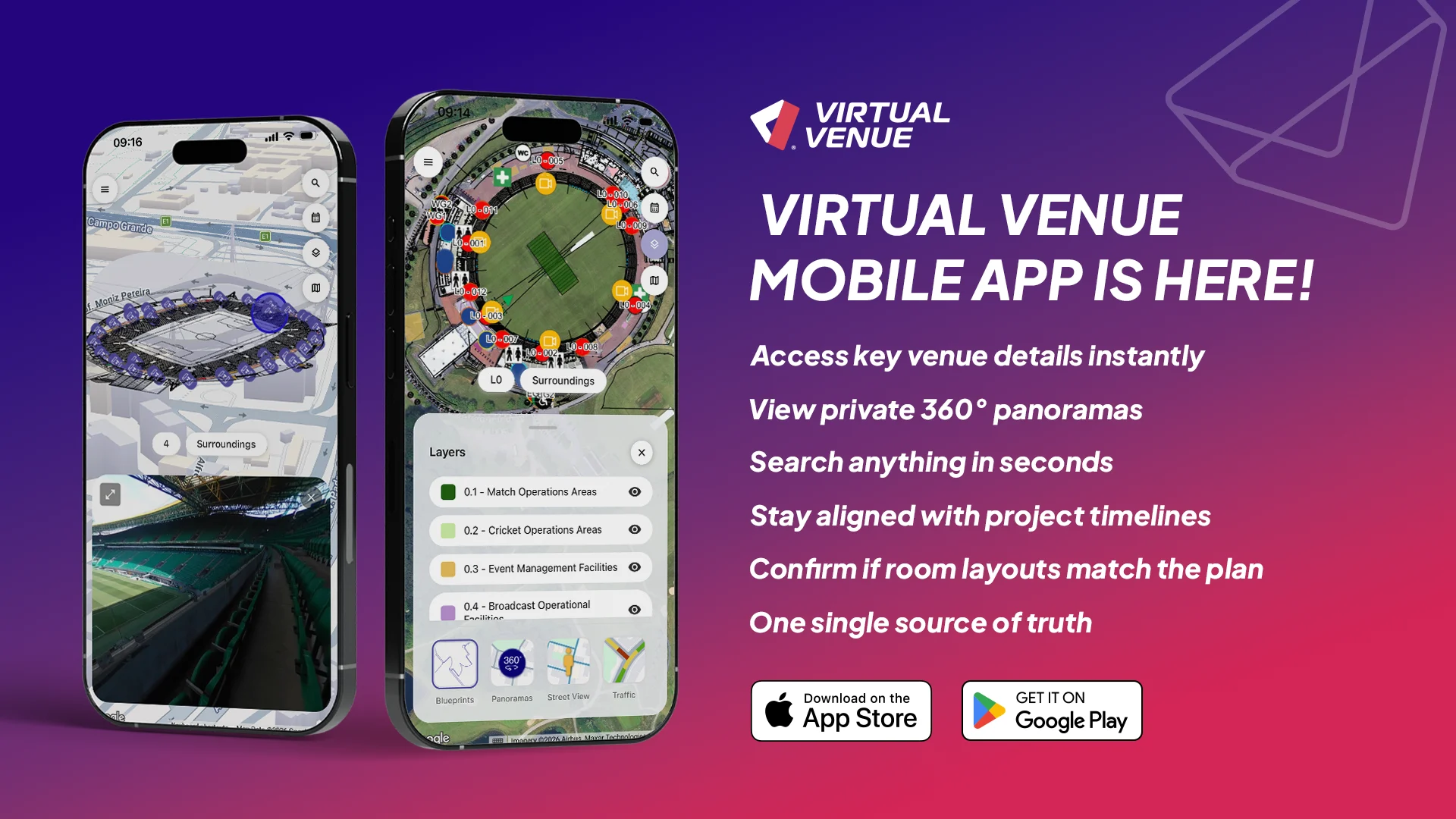
It enables organisers to visualise stadium layouts, simulate crowd and traffic flows, and coordinate multi-venue operations in one shared platform as seen in its collaboration with FIBA for the Basketball World Cups 2026 and 2027.
Ready to transform how you manage major events? Book a call to see how Virtual Venue supports top sports organizations like UEFA, FIFA, and FIBA in orchestrating seamless operations for events on a global stage.
Contact Us TodayFIBA is the International Basketball Federation, the global authority that governs the sport of basketball. It organises major tournaments such as the FIBA World Cup and Olympic basketball events.
FIBA needed a unified platform to manage venue operations across multiple countries. Virtual Venue provides real-time collaboration, standardisation, and sustainability benefits.
It’s a cloud-based platform for venue planning, helping event teams visualise, coordinate and manage everything from floorplans to asset lists, site visits and logistics.
Next are the Women’s World Cup 2026 in Germany and the Men’s World Cup 2027 in Qatar, with long-term plans to implement it across all FIBA events.
This partnership sets a new standard for how large-scale sporting events can be run: more efficiently, more collaboratively and with greater environmental awareness.
Latests from our Blog
See Virtual Venue in action
Streamline planning, enhance execution, and stay in full control with Virtual Venue.
Book a demo today and see how we can help optimize your events.
Get in Touch
All Rights Reserved © Virtual Venue











.svg)
.svg)
