Designing a Stadium Is One Challenge. Operating a Tournament Is Another.
Ask AI about this article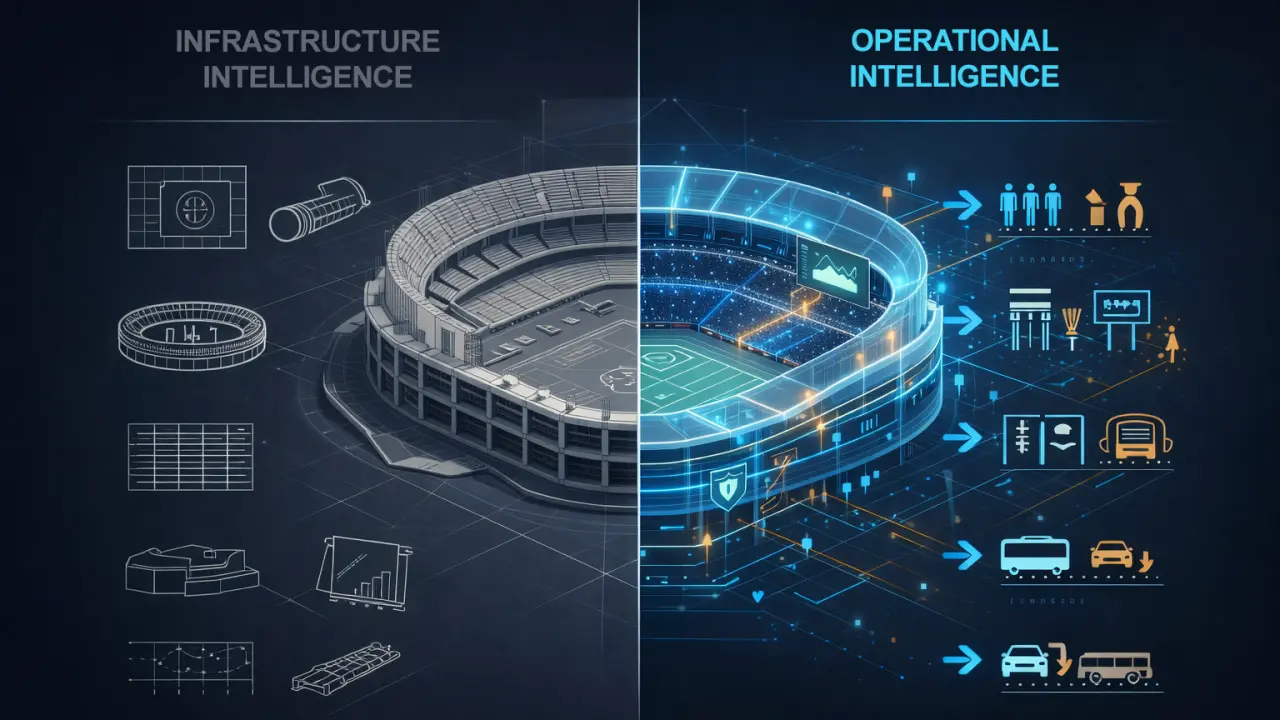

Stadium design has been transformed by digital tools that improve how venues are planned and built. But once the construction ends, the real complexity begins. Stadium operations and venue operations during major tournaments are dynamic, shifting every match day. That’s why tournament operations require a different kind of intelligence.
When we talk about digital transformation in sports, the conversation usually starts with design.
Platforms like Autodesk and Bentley Systems have fundamentally transformed how stadiums and arenas are designed and built. Modern venues would not exist at today’s level of precision and complexity without this infrastructure intelligence.
But once construction ends, a different kind of complexity begins. And that complexity has very little to do with concrete.
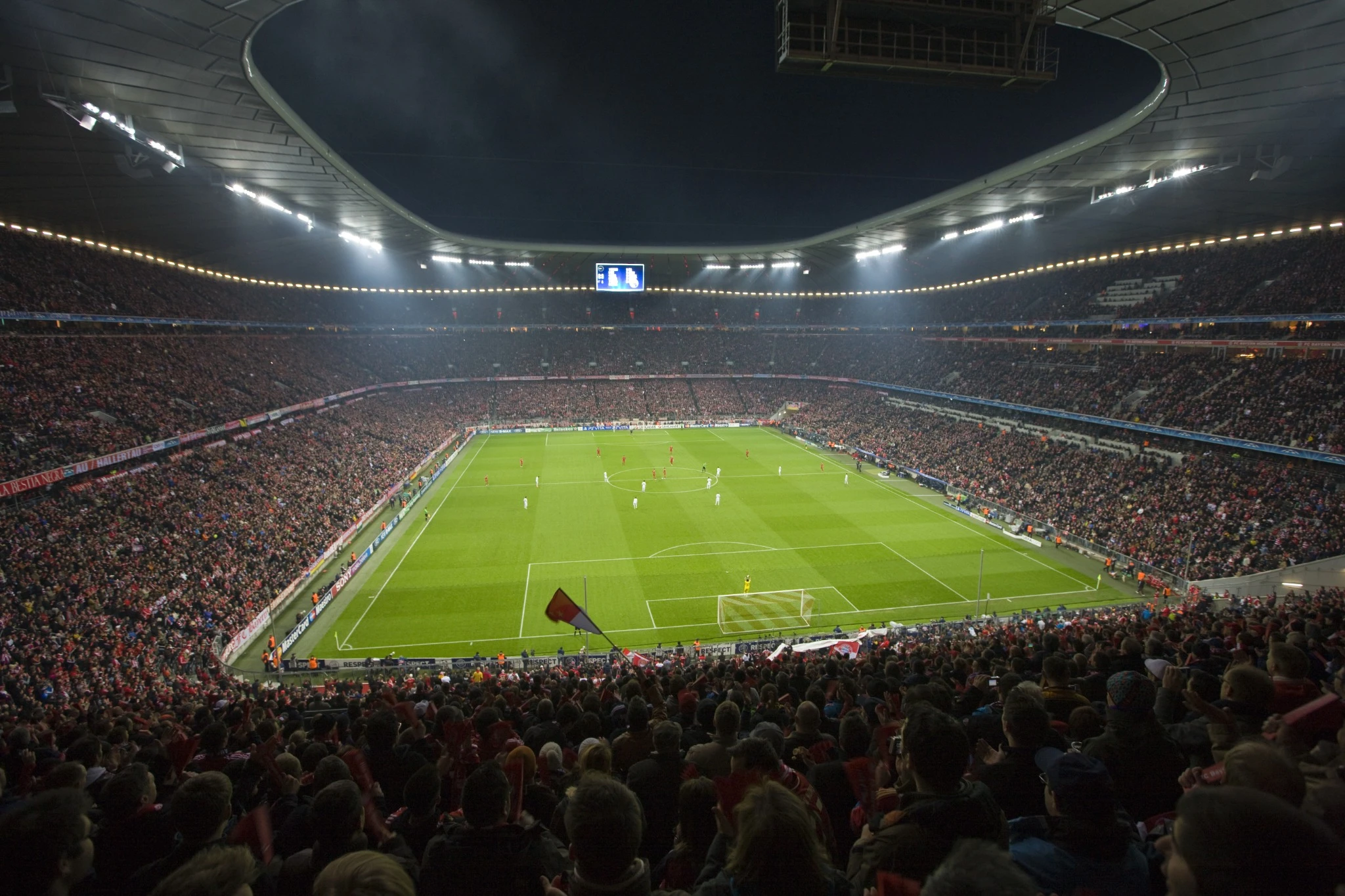
A stadium is static. An event is dynamic.
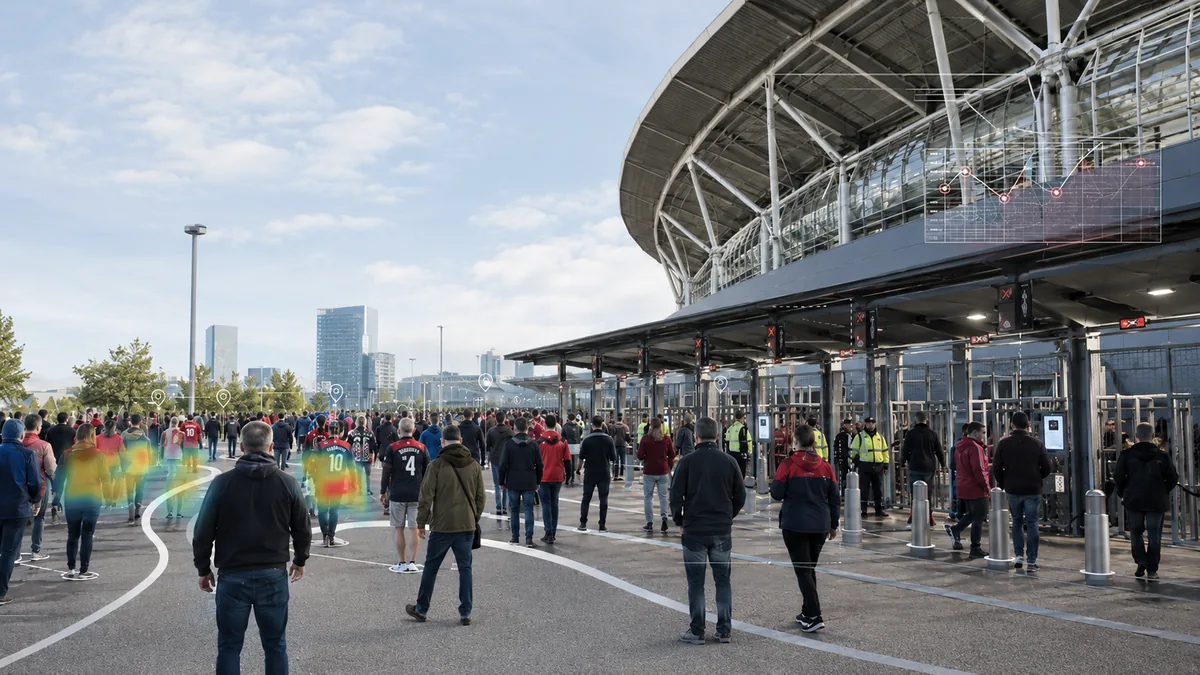
During a World Cup, Continental championship, or Olympic Games, venues become living tournament operations ecosystems.
Infrastructure intelligence focuses on how a building is designed, engineered, and constructed, capturing what the venue is: its geometry, systems, and constraints. That’s the world of stadium design, where precision and coordination are the priority. Operational intelligence begins when competition starts, focusing on how the venue behaves under real conditions, when stadium operations and venue operations become dynamic and time-based. In tournament operations, overlays, zoning, staffing, and crowd flows can change from match to match.
They are related. But they solve fundamentally different problems.

Construction platforms excel when the problem is structural certainty: define the venue, coordinate disciplines, and eliminate clashes before anything is built. But event delivery lives in a different reality. Once the doors open, the questions shift from “Is this correct?” to “Will this work today?”, with people, timing, and constant change driving every decision.
Construction platforms are exceptional at answering questions like:
Event organizers ask different questions:
These are not engineering questions. They are orchestration questions. And, disclaimer, I am an Engineer :)
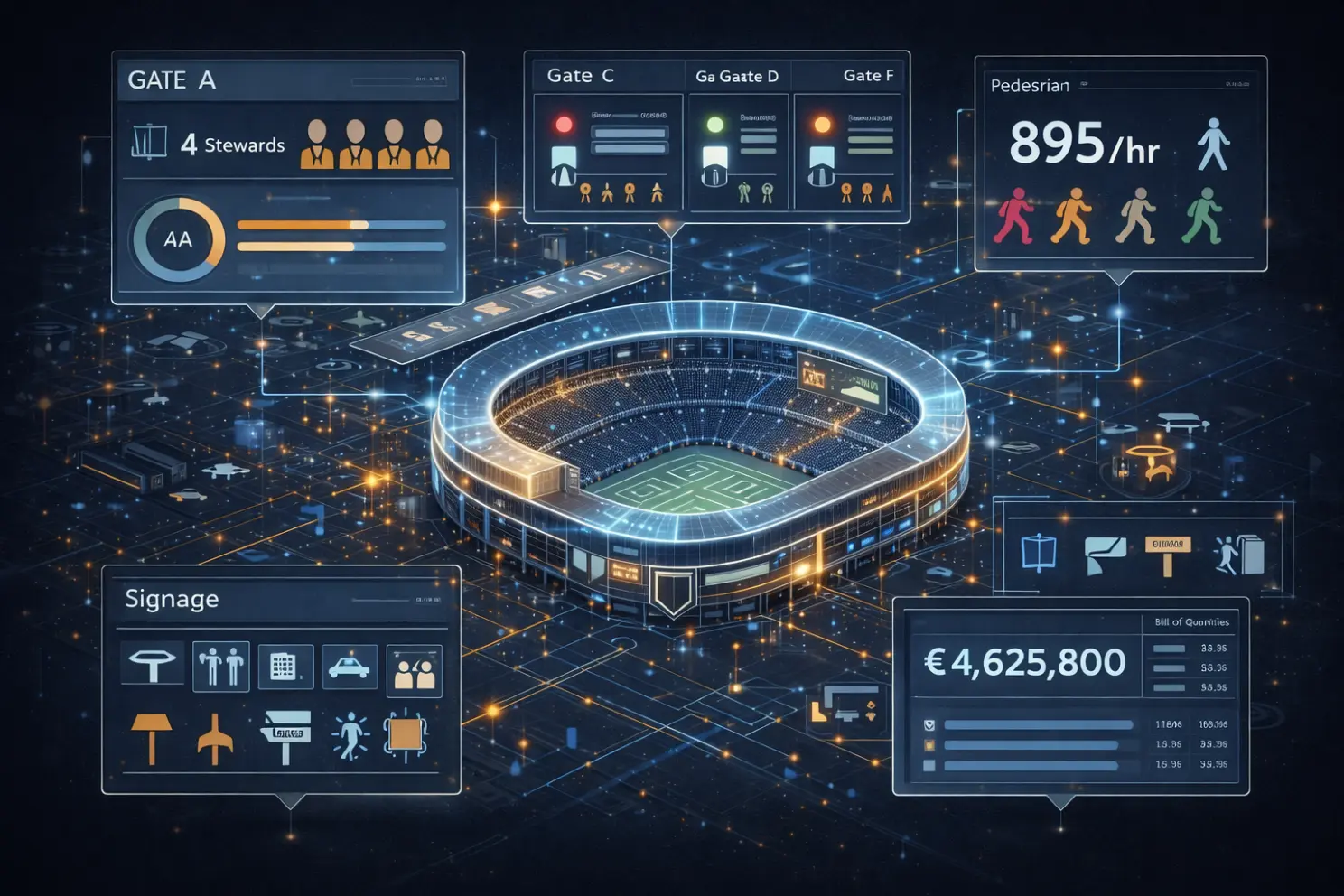
Below is a simplified comparison of capabilities relevant to venue management and tournament operations.
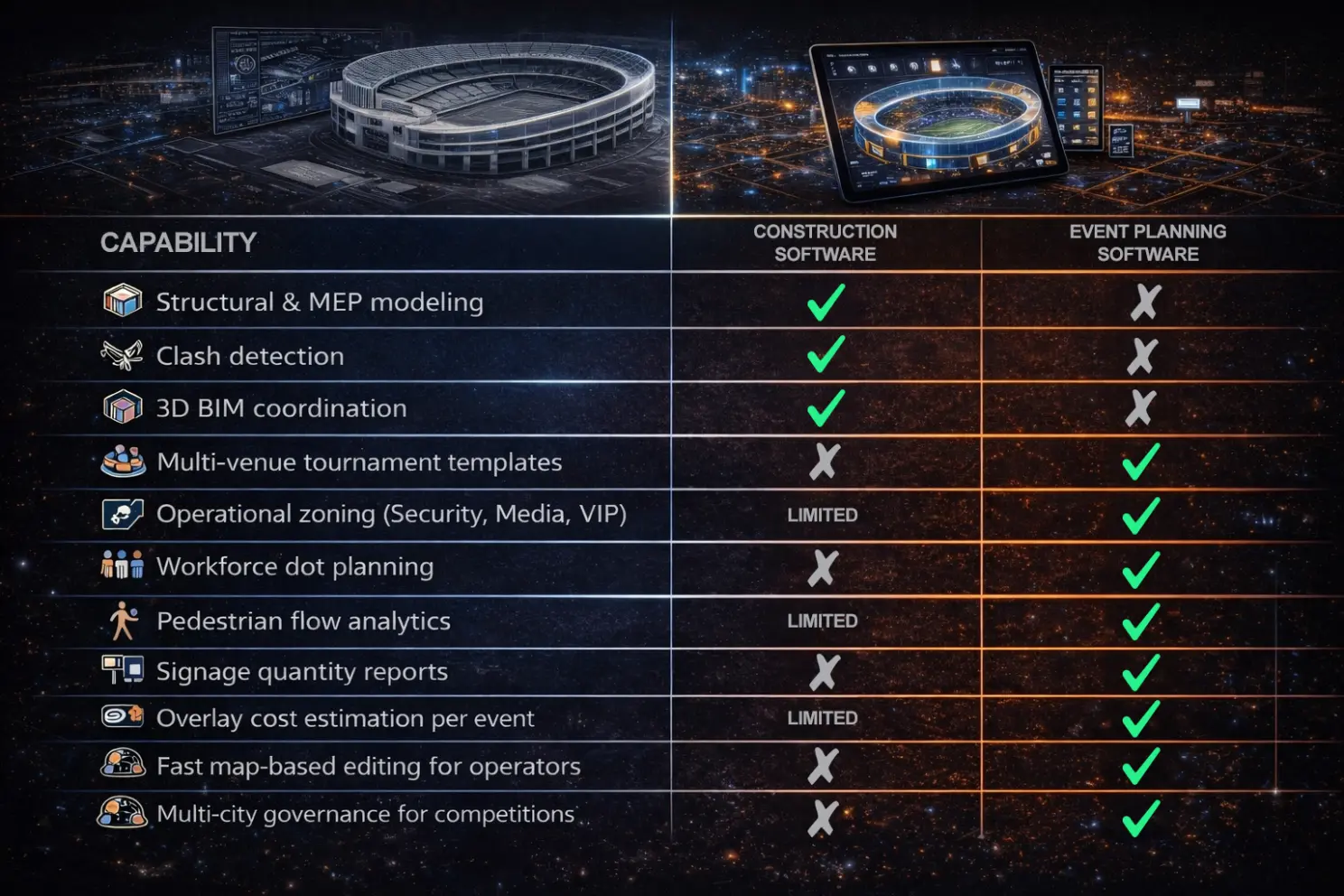
This is not about better or worse. It is about fit for purpose.
Construction software builds the venue. Event planning software operates it.
Not every national federation, organizing committee, or club has a BIM department, dedicated digital engineers, or enterprise construction licenses. That shouldn’t be a prerequisite to deliver a high-quality competition. Most tournament teams need tools built for venue operations: clear spatial planning, operational overlays, fast updates during site visits, and a shared source of truth that works for specialists and non-specialists alike.
Event excellence should not depend on mastering engineering tools. Venue directors and tournament operators need:
They need systems designed around the event lifecycle.

In major tournaments, the hardest challenge is not drawing lines on a map. It is ensuring consistency. Consistency in:
When ten venues operate under one competition framework, operational templates and governance become critical. This is where operational intelligence becomes strategic.
When ten venues operate under one competition framework, the real work is not the map work, it’s the governance work. Every venue has different teams, suppliers, local authorities, and physical constraints, yet the tournament still needs one consistent operating standard. That’s why operational templates become critica. With templates in place, you’re not reinventing the plan at every stadium, you’re applying a proven baseline, validating it on site, and managing only the exceptions.
This is where operational intelligence becomes strategic: it’s the mechanism that scales quality and control across host cities, reduces operational risk, and ensures that “the tournament way of working” is delivered consistently, match after match, venue after venue.

Digital transformation in sports began with infrastructure intelligence. It ensured stadiums were built better, faster, and safer. The next evolution is operational intelligence.
Because in the end, a competition is not judged by how well the stadium was engineered. It is judged by how well the event was delivered.
One builds the venue. The other orchestrates it.
And as tournaments become more complex, more distributed, and more scrutinized, that distinction becomes impossible to ignore.
Want to see how operational intelligence supports tournament delivery in practice? Explore our Event Planning approach.
Explore Event PlanningStadium design focuses on creating and building the venue: structure, engineering systems, construction coordination, and long-term infrastructure. Tournament operations focus on how that venue behaves during competition: security zoning, overlays, staffing, crowd flows, broadcast compounds, and constant changes from match to match. One is about building the asset; the other is about orchestrating the event lifecycle.
Operational intelligence is the capability to plan, coordinate, and adapt venue operations using real-world operational layers, people, spaces, assets, workflows, and rules, before and during event delivery. It enables teams to make fast decisions as conditions change, while keeping everyone aligned on a shared, up-to-date operational plan. In practice, it’s what turns a static stadium into a controlled, repeatable operating model on event day.
BIM and construction platforms excel at engineering precision: design coordination, clash detection, and construction workflows. Tournament operations need tools built for dynamic environments, where layouts shift per match, temporary infrastructure appears and disappears, staffing scales up and down, and multiple venues must follow a single governance framework. The questions are different, so the systems should be fit-for-purpose.
Stadium operations cover everything required to deliver a safe, consistent match day: gate operations, stewarding, security perimeters, crowd management, signage, VIP and hospitality setups, broadcast operations, and incident response. It also includes coordinating staff, suppliers, and venue teams across timelines and zones. The goal is smooth delivery under real-time constraints.
Standardization comes from operational templates and governance, not just drawings. Define shared rules for zoning, signage standards, staffing models, reporting structures, and overlay budgeting, then apply them consistently across every host venue and validate them during site visits.
Event overlays are the temporary operational layers added on top of a stadium’s permanent infrastructure, security zones, crowd flows, temporary seating, broadcast compounds, wayfinding/signage, hospitality layouts, and work areas. They change per match because opponents, kickoff times, crowd profiles, broadcast requirements, and operational priorities shift. Overlays are the “activation layer” that adapts the venue to the reality of each event.
Common risks include inconsistent zoning between venues, under-resourced gates, crowd congestion at pinch points, unclear signage, unmanaged temporary infrastructure, and fragmented information across teams and suppliers. These issues typically appear when plans aren’t reusable, updates are slow, or governance is not consistent across host cities. Reducing these risks is largely an orchestration and consistency challenge.
Latests from our Blog
See Virtual Venue in action
Streamline planning, enhance execution, and stay in full control with Virtual Venue.
Book a demo today and see how we can help optimize your events.
Get in Touch
All Rights Reserved © Virtual Venue














.svg)
.svg)
