Critical Event Management Software for Sports Venues
Ask AI about this article

Planning a major sporting event is one challenge. Running it while it's live is another. Once the event kicks off, teams need more than schedules, spreadsheets and static documents. They need a shared view of the venue, clear responsibilities and reliable information. That is what critical event management software is built to support.
Critical event management software brings together planning data, live monitoring, and cross-team coordination in a single system, used through the operational phases of an event, from venue handover to match day.
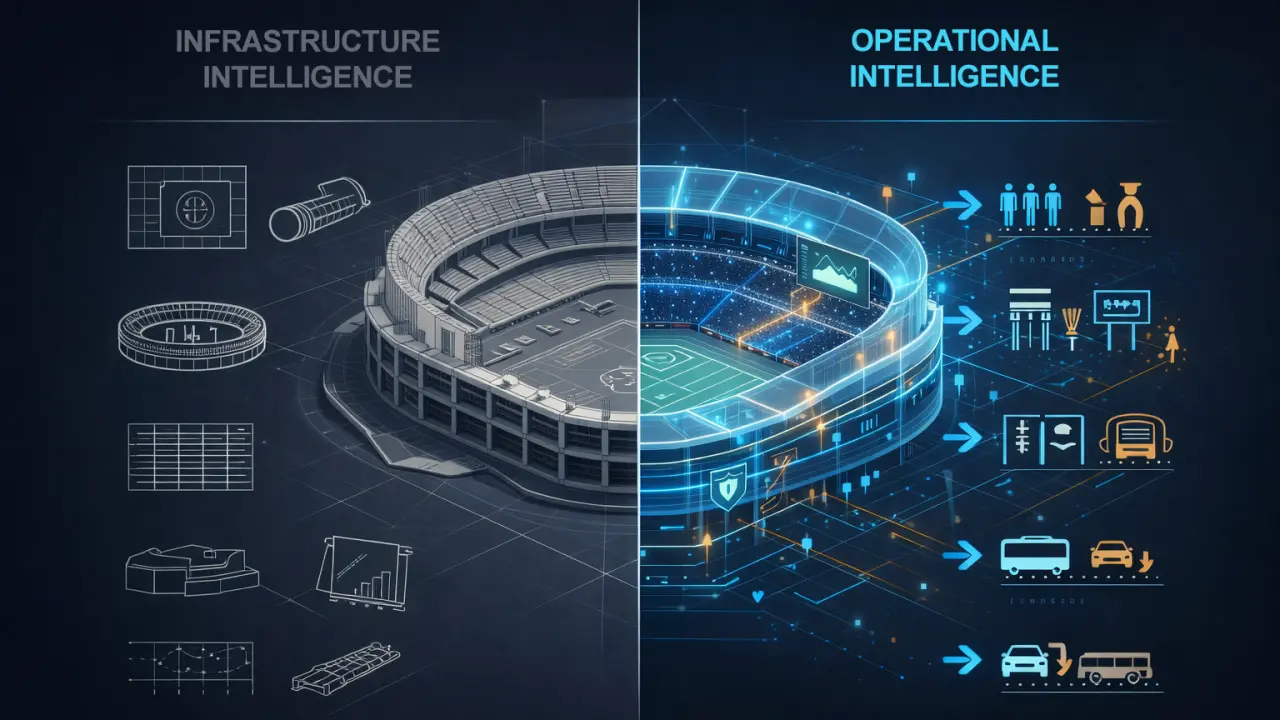
Unlike typical project management platforms, a location-based event operations system connects information to the venue itself. Reports, action points, assets, facilities and operational plans can be associated with specific points in the venue. It’s not just another item on a list.
For federations, leagues, and organising committees running events with hundreds of stakeholders, such as venue owners, security, broadcasters, city authorities, this location-based structure is what keeps operations coherent once an event is underway.
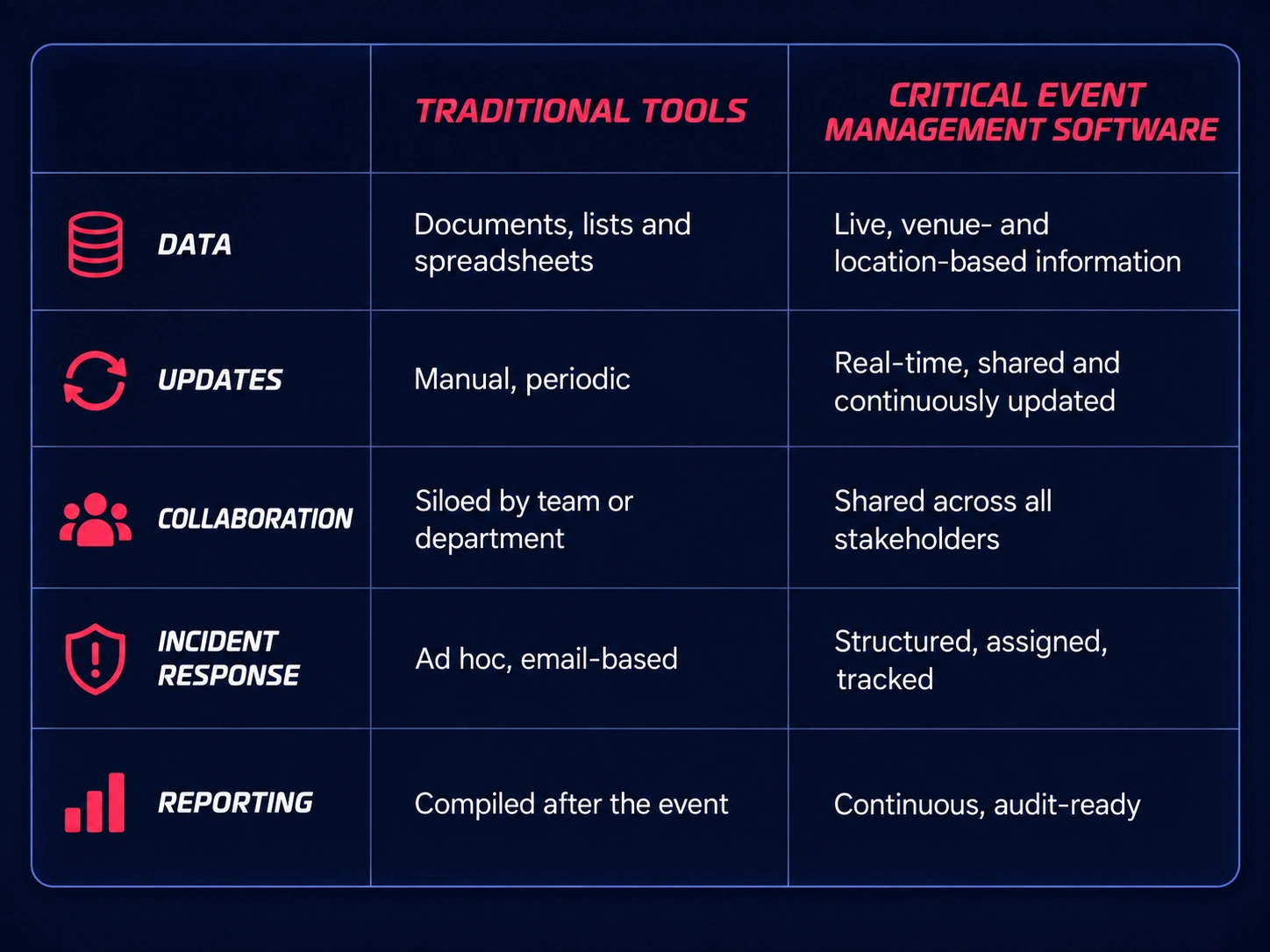
Most venue management tools were built for a single job: organising static information, like floor plans, contact lists, schedules, before an event starts. That's useful for planning, but it breaks down the moment an event goes live.
Match day doesn't wait for a document to be updated. Gates open, crowds move, weather changes, and issues surface across dozens of zones at once. Teams relying on spreadsheets and shared folders end up reacting to information that's already outdated, coordinating over email threads that no one has time to read during operations.
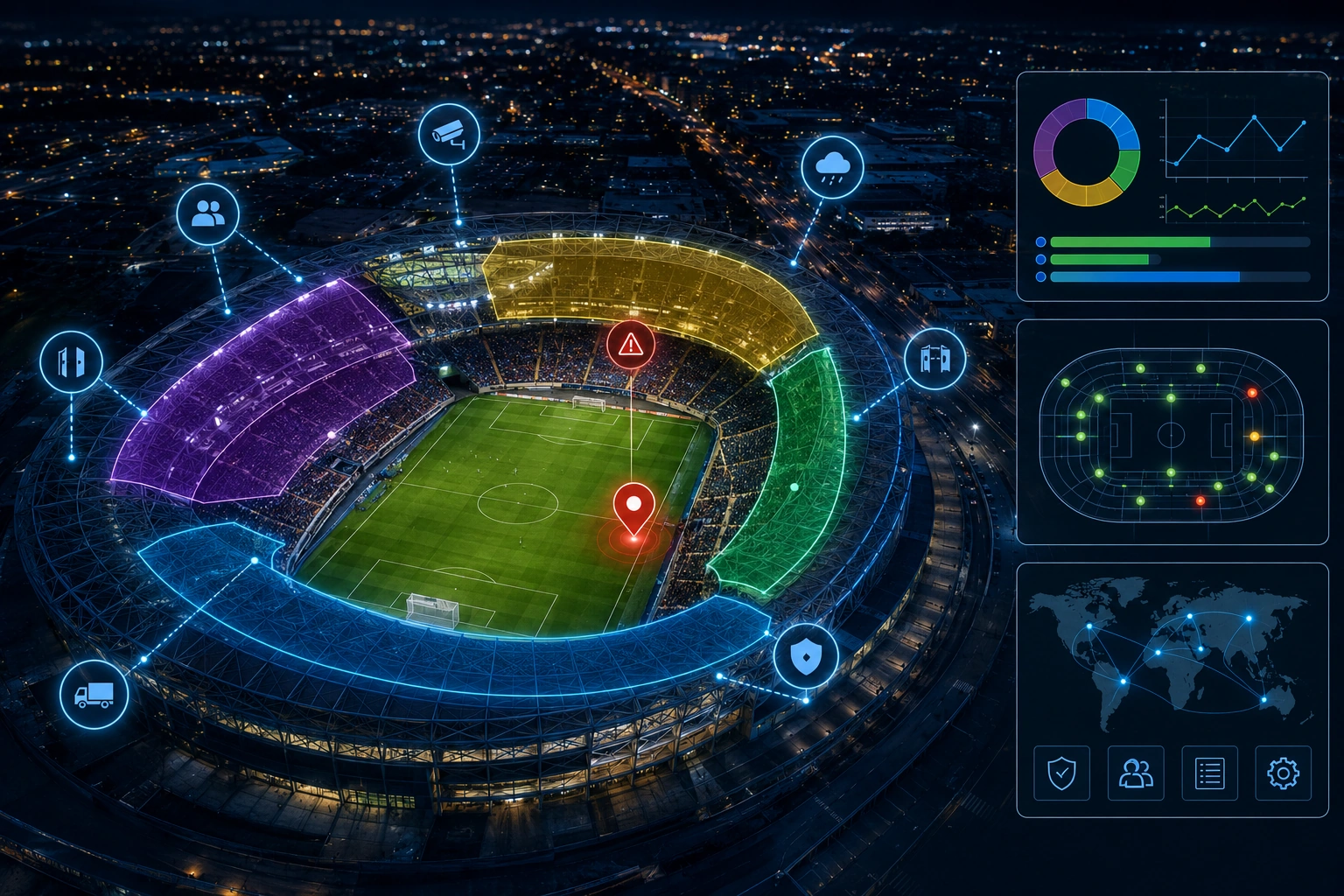
The events that run smoothly today aren't the ones with the most detailed plan, but the ones with the clearest live picture. Operations teams now expect real-time dashboards showing occupancy, gate access, traffic, and weather conditions as they happen, not as they're reported after the fact.
The objective is not simply to collect more data. It is to organise information so that teams can understand:
A shared, up-to-date view of what's happening across the venue, accessible to every team involved, not siloed by department.
A structured way to log, assign, and track incidents as they arise, with clear ownership and status, so nothing gets lost between shifts.
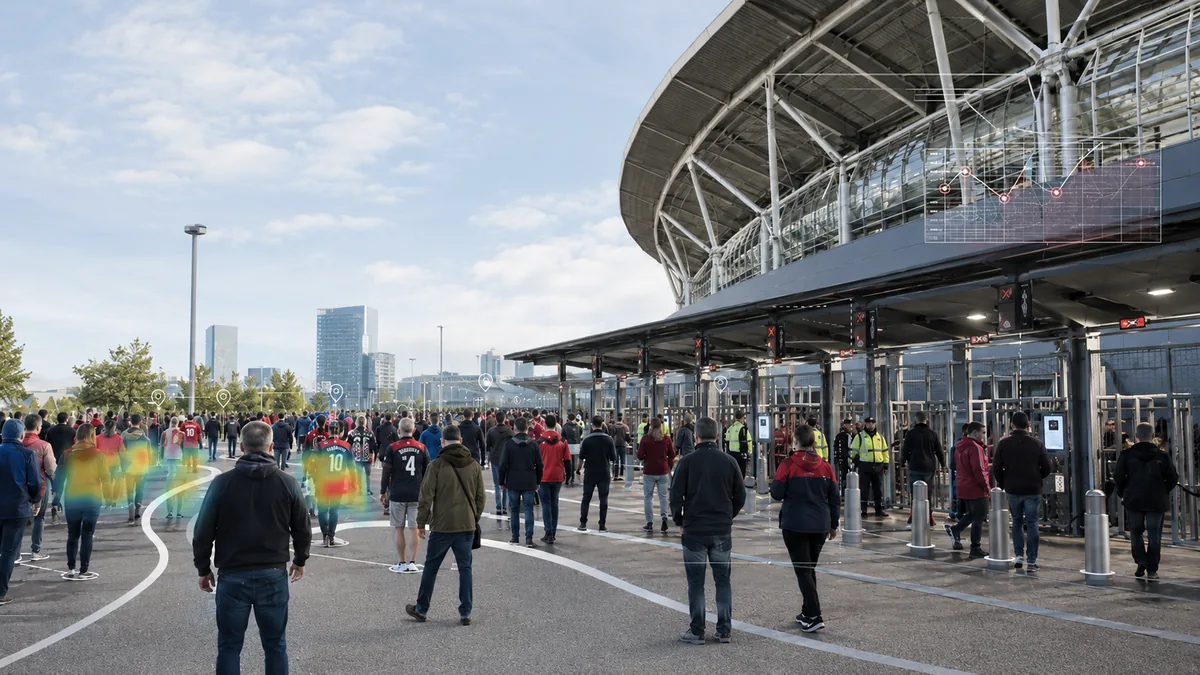
Live crowd data - occupancy, dwell time, movement patterns, mapped to specific zones, so teams can act before congestion becomes a safety issue.
Real-time visibility into entry points and access control, so bottlenecks are caught early rather than discovered by the queue outside.
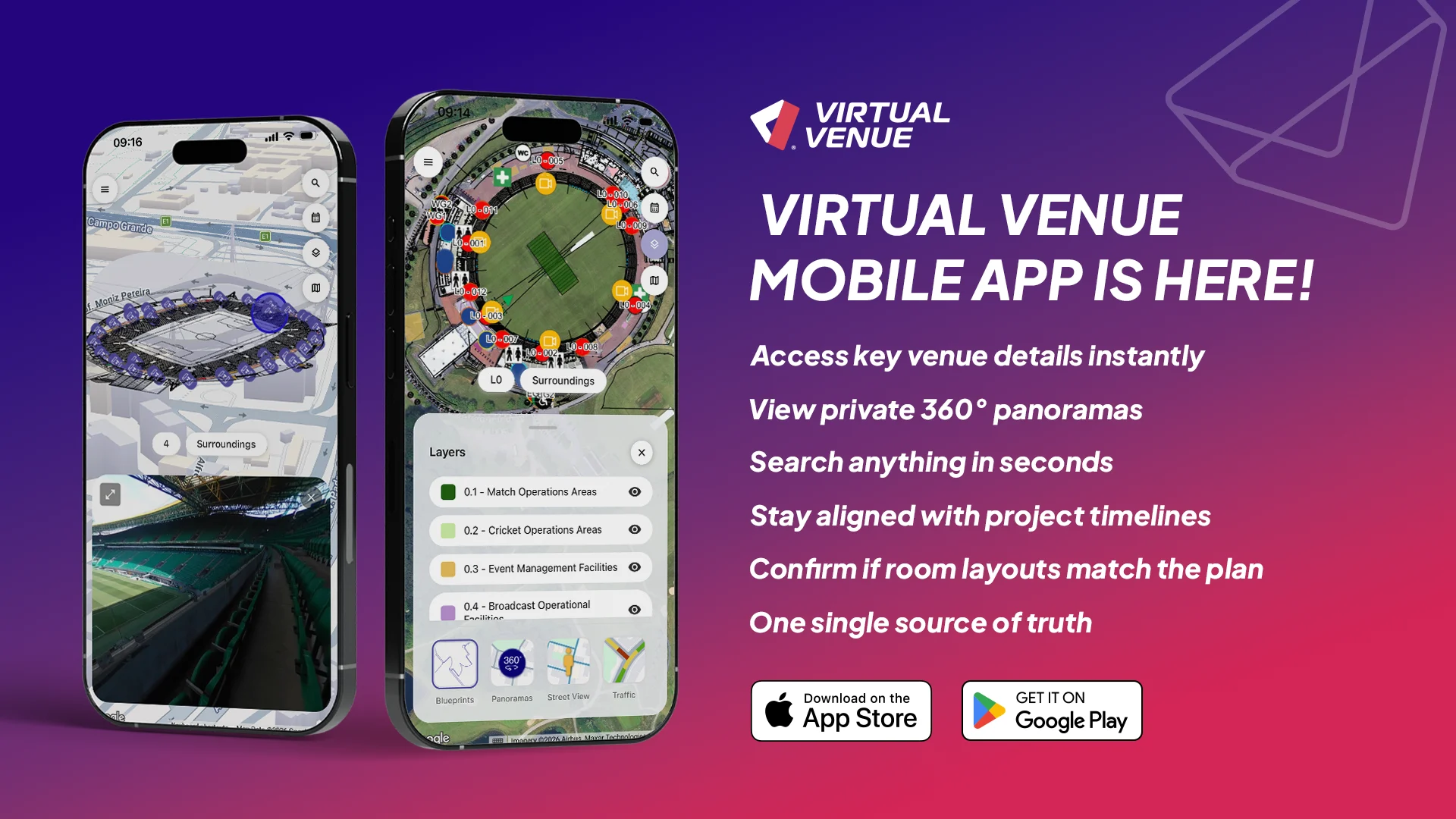
Field teams need the same information as the control room. Mobile access means reports, action points, and maps travel with the people working the venue.
A documented, repeatable process for receiving a site before an event and returning it afterwards, protecting both operator and venue owner.
Internal teams, suppliers, and partners working from the same maps and the same terminology, cutting down on the confusion that costs time on match day.
The bigger picture, event monitoring, that pulls together capacity, access, weather, and incidents into one operational view.
How Sports Venues use Critical Event Management Software
Virtual Venue is a collaborative, map-centric platform designed for major sports event organisers. Trusted by UEFA, FIFA, FIBA, RFEF and other leading federations, it supports teams across the full event lifecycle - from bidding and planning through to venue operations and match day.
At its core is a shared digital representation of the event venue. Teams can use venue maps, floor plans, overlays, functional allocations, documents and 360-degree panoramic imagery to plan and communicate how a site will be used.
By connecting operational information directly to the venue, Virtual Venue helps teams maintain a consistent source of information and collaborate more effectively from early planning through to event delivery.
See how Virtual Venue supports real-time event operations
Contact usGeneral event management software typically covers planning - schedules, contacts, documents. Critical event management software adds the operational layer: live monitoring, incident tracking, and coordination during the event itself, when decisions need to be made in minutes, not days.
No. It's used across venues of different sizes, but it matters most where multiple teams, high attendance, or complex logistics make real-time coordination essential - major tournaments, multi-venue events, and federation-run competitions.
No. It works alongside security and safety systems, pulling relevant data - access, crowd density, incidents - into one operational view so teams can coordinate faster, rather than replacing specialist security infrastructure.
By turning site visits, inspections, and incident logs into structured, timestamped records tied to specific locations - making it straightforward to produce audit-ready reports after the event.
Latests from our Blog
See Virtual Venue in action
Streamline planning, enhance execution, and stay in full control with Virtual Venue.
Book a demo today and see how we can help optimize your events.
Get in Touch
All Rights Reserved © Virtual Venue















.svg)
.svg)
